Retatrutide Research: Effects on Liver Function and Fatty Liver Disease (MASLD/MASH)
Retatrutide is one of the most promising investigational peptides for improving liver health in people with obesity, insulin resistance, and fatty liver disease. It is a triple agonist that activates:
GLP-1 receptors
GIP receptors
Glucagon receptors
This combination appears to produce greater reductions in liver fat than many earlier incretin-based therapies.
Key Phase 2 MASLD Study
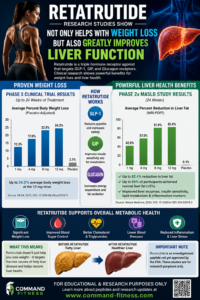
A randomized, placebo-controlled Phase 2a trial evaluated 98 participants with metabolic dysfunction-associated steatotic liver disease (MASLD) and elevated liver fat. Liver fat was measured using MRI-PDFF, one of the most accurate non-invasive methods available.
Liver Fat Reduction After 24 Weeks
Retatrutide Dose
Reduction in Liver Fat
1 mg
42.9%
4 mg
57.0%
8 mg
81.4%
12 mg
82.4%
Placebo
+0.3%
Normalization of Liver Fat (<5%)
Retatrutide Dose
Participants Achieving Normal Liver Fat
1 mg
27%
4 mg
52%
8 mg
79%
12 mg
86%
Placebo
0%
Impact on Liver Health Markers
Researchers found that liver fat reduction was associated with:
Improved insulin sensitivity
Reduced visceral (abdominal) fat
Improved lipid metabolism
Reduction in biomarkers associated with fatty liver disease progression
Improvements in liver enzyme measures and metabolic health markers overall
The study authors noted that the magnitude of liver fat reduction observed with the 8 mg and 12 mg doses was among the largest reported for any obesity or metabolic therapy at the time of publication.
Why Retatrutide May Be Different
Researchers believe the addition of glucagon receptor activation may contribute to:
Increased hepatic (liver) fat oxidation
Increased energy expenditure
Greater reduction of liver fat stores
Enhanced metabolic flexibility
This may help explain why retatrutide has shown larger liver-fat reductions than many GLP-1-only therapies.
Additional Metabolic Benefits Relevant to Liver Function
Recent Phase 3 data presented in 2026 showed retatrutide also improves:
Body weight
Blood glucose control
Blood pressure
Cholesterol profiles
Triglycerides
These changes are important because they address several of the underlying drivers of MASLD and MASH progression.
What Researchers Are Still Studying
While the liver-fat data are extremely encouraging, researchers are still evaluating whether retatrutide can:
Reverse liver fibrosis (scarring)
Prevent progression to cirrhosis
Improve biopsy-confirmed MASH outcomes
Produce long-term liver benefits independent of weight loss
Those studies are ongoing. Current evidence is strongest for reducing liver fat accumulation and improving metabolic drivers of liver disease.
Bottom Line
Based on current human clinical data, retatrutide has demonstrated:
Up to 82% reduction in liver fat
Up to 86% normalization of liver fat levels
Significant improvements in metabolic factors associated with liver disease
Potential advantages over earlier GLP-1 therapies for fatty liver disease due to its triple-agonist mechanism.
For someone researching peptides for fatty liver disease, elevated liver enzymes, insulin resistance, or metabolic syndrome, retatrutide is currently one of the most closely watched investigational therapies in clinical development.