

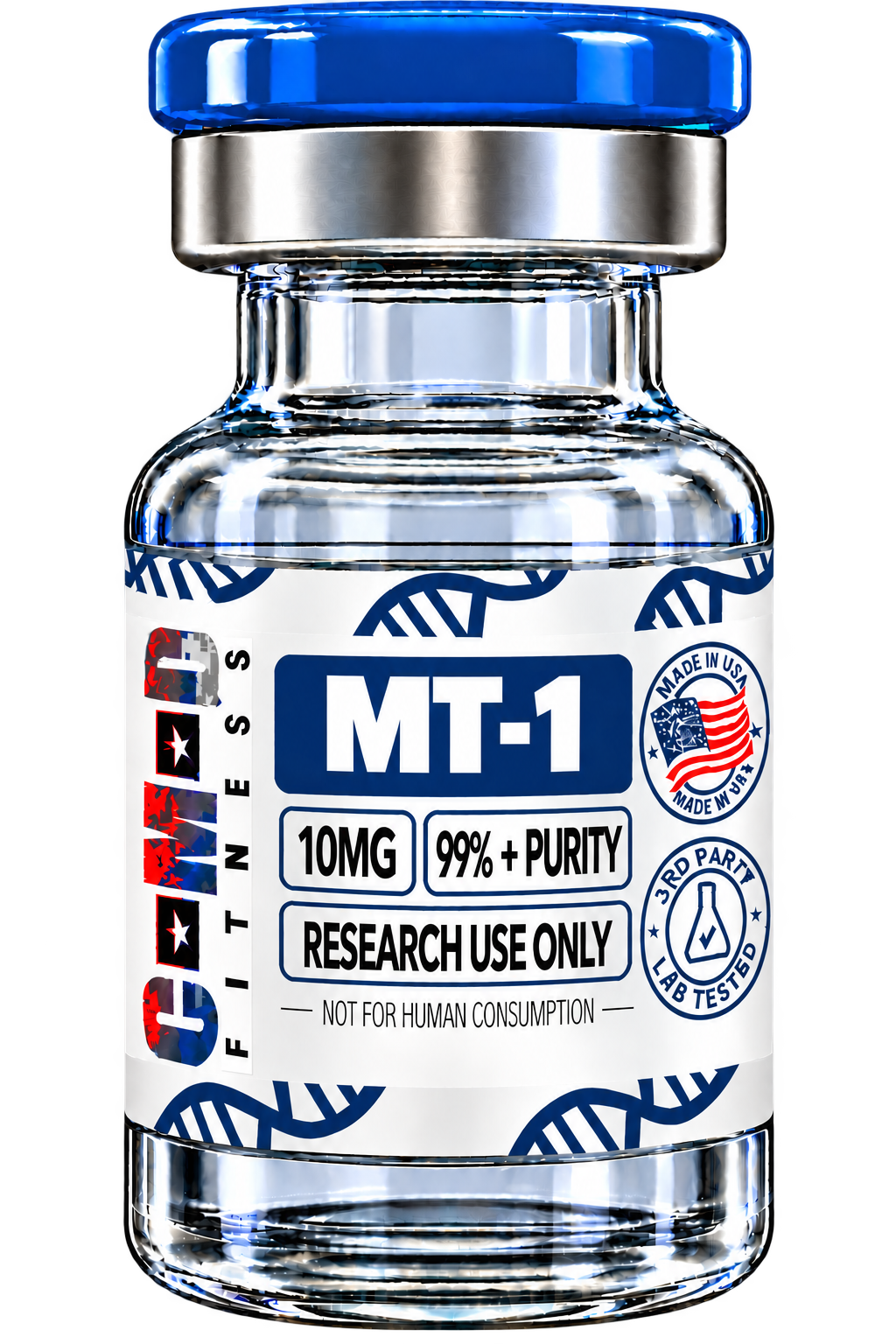

For research use only. Not for human consumption.
MT-1 (Melanotan-1 / Afamelanotide) is a synthetic α-MSH analog that stimulates melanin production and skin pigmentation via MC1R receptor activation, providing photoprotection and UV defense in research studies.
Price:
$45.00
Select Quantity:
Out of stock
MT-1 is a synthetic peptide analog of α-melanocyte-stimulating hormone (α-MSH) designed to activate melanocortin receptors, primarily MC1R, in melanocytes. This activation stimulates melanin production, leading to increased skin pigmentation and enhanced photoprotection. MT-1 is chemically modified to be more stable and resistant to enzymatic degradation compared to natural α-MSH, making it suitable for research applications in pigmentation, UV protection, and melanocortin signaling.
Peptide Length: 13 amino acids
Structure: Linear peptide with chemical modifications for stability and receptor specificity
Mechanism: Binds to MC1R receptor, stimulating melanogenesis and photoprotective pathways
Water-Soluble: Suitable for in vitro and preclinical studies
Studying melanin synthesis and skin pigmentation mechanisms
Investigating UV-induced photoprotection and oxidative stress
Exploring melanocortin receptor signaling in metabolism, appetite, and immune modulation
Evaluating potential therapeutic applications for skin disorders or pigmentation deficiencies
MT-1 is a synthetic α-MSH analog that promotes melanin production, skin tanning, and UV protection. Its enhanced stability and receptor specificity make it a valuable peptide for preclinical and laboratory research in pigmentation biology and melanocortin receptor signaling.
Type: Synthetic peptide analog of α-melanocyte-stimulating hormone (α-MSH)
Amino Acid Length: 13 amino acids
Molecular Weight: ~1660 Da
Structure: Linear peptide with chemical modifications to enhance stability and receptor binding
Receptor Target: Primarily MC1R; minor activity at other melanocortin receptors (MC3R, MC4R)
Melanogenesis: Stimulates melanin production in melanocytes
Signal Transduction: Activates adenylate cyclase → cAMP pathway, leading to melanin synthesis
Photoprotection: Increases UV resistance by enhancing melanin-mediated defense
Stability Modifications: Chemically altered to resist enzymatic degradation for prolonged activity
Skin Pigmentation: Induces tanning independent of UV exposure
UV Defense: Enhances photoprotective melanin in skin cells
Secondary Effects: May influence appetite, sexual function, and energy metabolism through melanocortin receptors
Water-Soluble: Suitable for in vitro studies and preclinical research
Stability: Resistant to proteases compared to natural α-MSH
Half-Life: Longer than α-MSH due to structural modifications
MT-1 is a stable synthetic peptide analog of α-MSH that activates MC1R receptors, stimulates melanin production, and provides photoprotection. Its biochemical characteristics—linear peptide structure, water solubility, receptor specificity, and enzymatic stability—make it an effective tool for research on skin pigmentation, UV protection, and melanocortin signaling.
Investigating melanin synthesis pathways in melanocytes
Studying skin tanning mechanisms independent of UV exposure
Evaluating melanocyte biology and pigmentation disorders
Examining UV-induced damage prevention via melanin production
Studying oxidative stress response and DNA protection in skin cells
Evaluating photoprotective mechanisms in experimental models
Researching MC1R receptor signaling
Exploring secondary effects on MC3R and MC4R, including energy balance, appetite, and sexual function
Investigating receptor pharmacology and peptide-receptor interactions
Evaluating potential treatments for pigmentation disorders such as vitiligo or hypopigmentation
Studying skin protection strategies in preclinical models
Exploring synergistic effects with other peptides or compounds in dermatology research
MT-1 is used in research to study skin pigmentation, melanogenesis, UV protection, and melanocortin receptor signaling. Its stability and receptor specificity make it valuable for preclinical and laboratory studies on photoprotection, pigmentation disorders, and melanocortin-mediated pathways.
Melanotan I (MT-1), also known as afamelanotide, is a synthetic linear peptide analog of α-melanocyte-stimulating hormone (α-MSH). Structural modifications make it more resistant to enzymatic degradation and provide greater biological stability than endogenous α-MSH.
MT-1’s modified peptide structure increases resistance to enzymatic degradation while retaining melanocortin-receptor activity, making it useful for research involving melanogenesis, pigmentation pathways, melanocortin signaling, photobiology, and MC1R-mediated cellular responses.
For research and laboratory applications only.
Tested by Freedom Diagnostics Testing @ Freedom Diagnostics Testing – Reliable. Accountable. Accessible.
Temperature: Store refrigerated at 2–8 °C (36–46 °F) for short-term use
Long-Term Storage: Freeze at −20 °C or lower to maintain stability
Light Protection: Keep protected from direct light
Moisture Protection: Maintain in original sealed vial
Shelf Life: Typically 12–24 months when stored properly
Diluent: Sterile water or bacteriostatic water
Temperature: Store refrigerated at 2–8 °C
Use Period: Recommended within 7–14 days
Handling: Gently swirl to dissolve; avoid vigorous shaking
Do NOT freeze after reconstitution
Inspect solution before use: should be clear, colorless, and free of particulates
Discard if cloudy, discolored, or precipitated
Use sterile technique during reconstitution and experimental handling
Protect from heat, light, and mechanical agitation to maintain peptide integrity
MT-1 is most stable as a lyophilized powder stored refrigerated or frozen. Once reconstituted, it should be kept cold, used promptly, and protected from light and agitation to preserve biological activity for laboratory and preclinical research.
Command Center is a leading provider of USA manufactured, research peptides.
Copyright 2026 © Command Center All Rights Reserved