

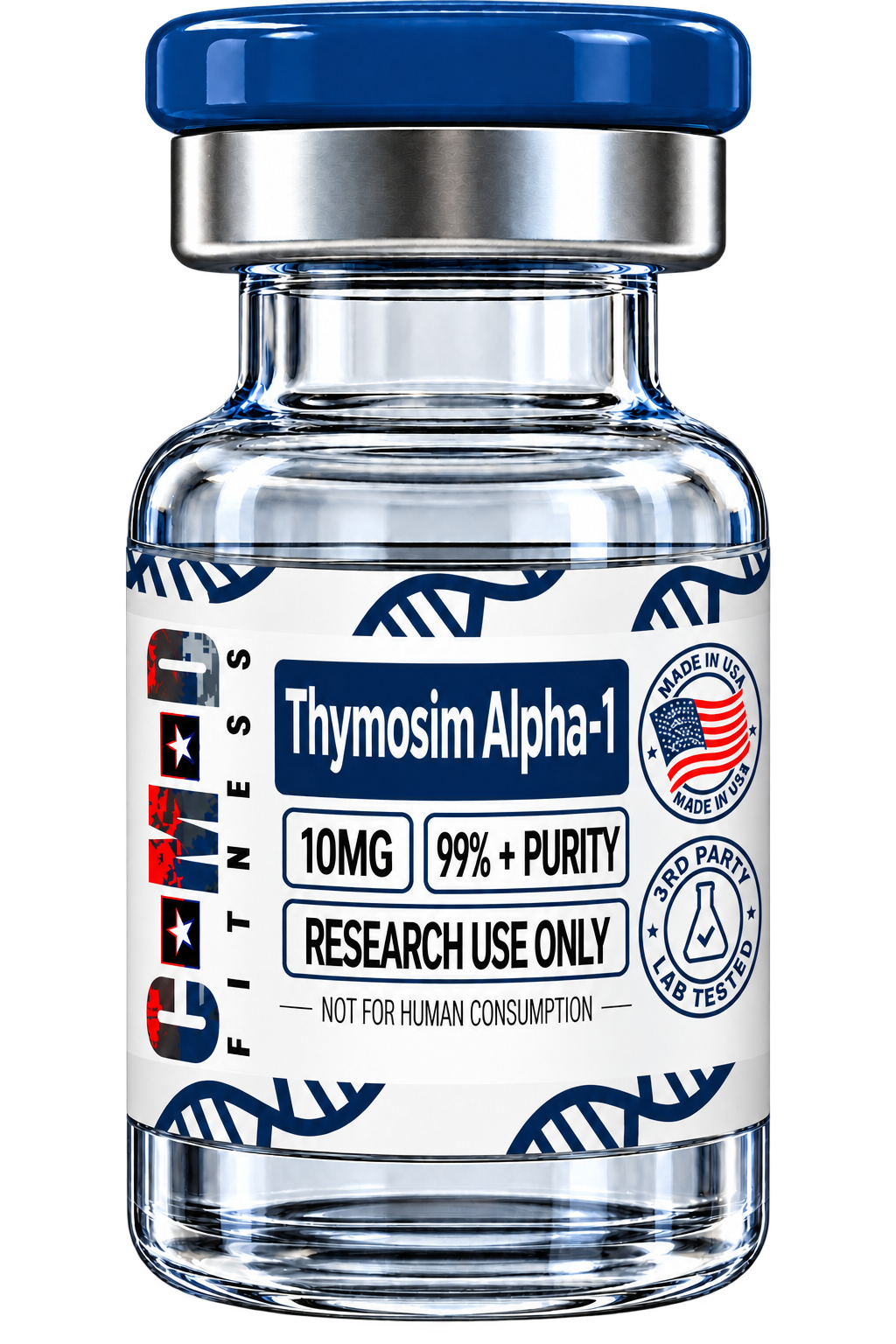

For research use only. Not for human consumption.
Thymosin Alpha-1 (Tα1) is a synthetic 28-amino acid peptide that functions as an immunomodulator, supporting T-cell activity and immune system regulation. It is studied for its role in enhancing immune response, promoting antigen presentation, and modulating cytokine signaling. Thymosin Alpha-1 is available in some regions under the brand name Zadaxin and is supplied for clinical or research applications depending on jurisdiction.
Price:
$65.00 – $120.00Price range: $65.00 through $120.00
Select Quantity:
Peptide Length: 28 amino acids
Origin: Synthetic version of a naturally occurring thymic peptide derived from thymosin fraction 5
Molecular Weight: ~3.1 kDa
Structure: Linear peptide
Form: Typically supplied as lyophilized powder for reconstitution
Thymosin Alpha-1 functions as an immune response modulator, influencing both innate and adaptive immunity:
Promotes T-cell differentiation and maturation
Enhances CD4⁺ and CD8⁺ T-cell function
Increases activity of natural killer (NK) cells
Supports dendritic cell activation
Modulates cytokine production (e.g., IL-2, IFN-γ)
It helps restore immune balance rather than overstimulating immune pathways.
Thymosin Alpha-1 has been studied or used in:
Chronic viral infections (e.g., hepatitis B and C in certain countries)
Immune deficiency conditions
Oncology as an adjunct immune-supportive therapy
Vaccine response enhancement research
Sepsis and inflammatory immune dysregulation studies
It is marketed in some regions under the name Zadaxin.
Administered via subcutaneous injection (clinical settings)
Short plasma half-life but prolonged immunomodulatory effects
Does not function as a hormone replacement
Acts through immune signaling pathways rather than direct pathogen targeting
Store lyophilized product at −20 °C
Protect from moisture and light
Reconstituted solutions typically stored refrigerated (2–8 °C)
Approval status varies by country. In some regions it is an approved prescription medicine; in others it is used for research purposes only.
Peptide Length: 28 amino acids
Molecular Weight: ~3,108 Da
Structure: Linear, unmodified peptide
Origin: Synthetic analogue of a naturally occurring thymic peptide
Solubility: Water soluble
Predominantly alpha-helical conformation in physiological environments
Contains acidic and basic residues contributing to amphipathic character
No glycosylation or lipidation (unlike many long-acting peptides)
Stable as lyophilized powder; susceptible to proteolytic degradation in solution
Thymosin Alpha-1 interacts with components of the innate and adaptive immune systems, including:
Toll-like receptors (TLRs) on dendritic cells
Enhancement of antigen presentation pathways
Modulation of T-lymphocyte activation and differentiation
Upregulation of Th1-type immune responses
It acts as an immune response modulator, helping normalize dysregulated immune activity rather than directly stimulating excessive immune activation.
Increases expression of MHC class I molecules
Enhances CD4⁺ and CD8⁺ T-cell responsiveness
Stimulates natural killer (NK) cell activity
Modulates cytokines such as IL-2 and IFN-γ
Short plasma half-life after administration
Biological effects may persist beyond measurable plasma levels
Cleared primarily via proteolytic pathways
Thymosin Alpha-1 supports immune system maturation and regulation, making it valuable in research on:
Viral immunity
Immune deficiency models
Vaccine adjuvant mechanisms
Cancer immunology
It is marketed in certain countries under the brand name Zadaxin, depending on regulatory approval status.
Thymosin Alpha-1 is a widely studied immunomodulatory peptide with applications in both preclinical and clinical research.
Enhances T-cell differentiation and maturation
Stimulates CD4⁺ and CD8⁺ T-cell activity
Activates natural killer (NK) cells
Regulates cytokine production (e.g., IL-2, IFN-γ)
Investigates immune system balance and restoration in immunodeficiency models
Studies on viral infections (hepatitis B and C, influenza, SARS-CoV-2)
Investigates immune enhancement and antiviral defense mechanisms
Evaluates peptide as an adjunct therapy to vaccines or antiviral treatments
Examines effects on tumor-infiltrating lymphocytes
Investigates immune checkpoint modulation and antitumor immune activity
Evaluates potential as an adjuvant in immunotherapy studies
Tested as a vaccine adjuvant to enhance antigen presentation
Improves immune response robustness in preclinical models
Explored in sepsis, autoimmune, and inflammatory disease models
Modulates both pro- and anti-inflammatory signaling for homeostasis
Supports mechanistic studies on immune system signaling pathways
Thymosin Alpha-1 is primarily supplied as a lyophilized peptide for research purposes and is a valuable tool in studies of immune regulation, antiviral defense, and adjunctive therapeutic strategies.
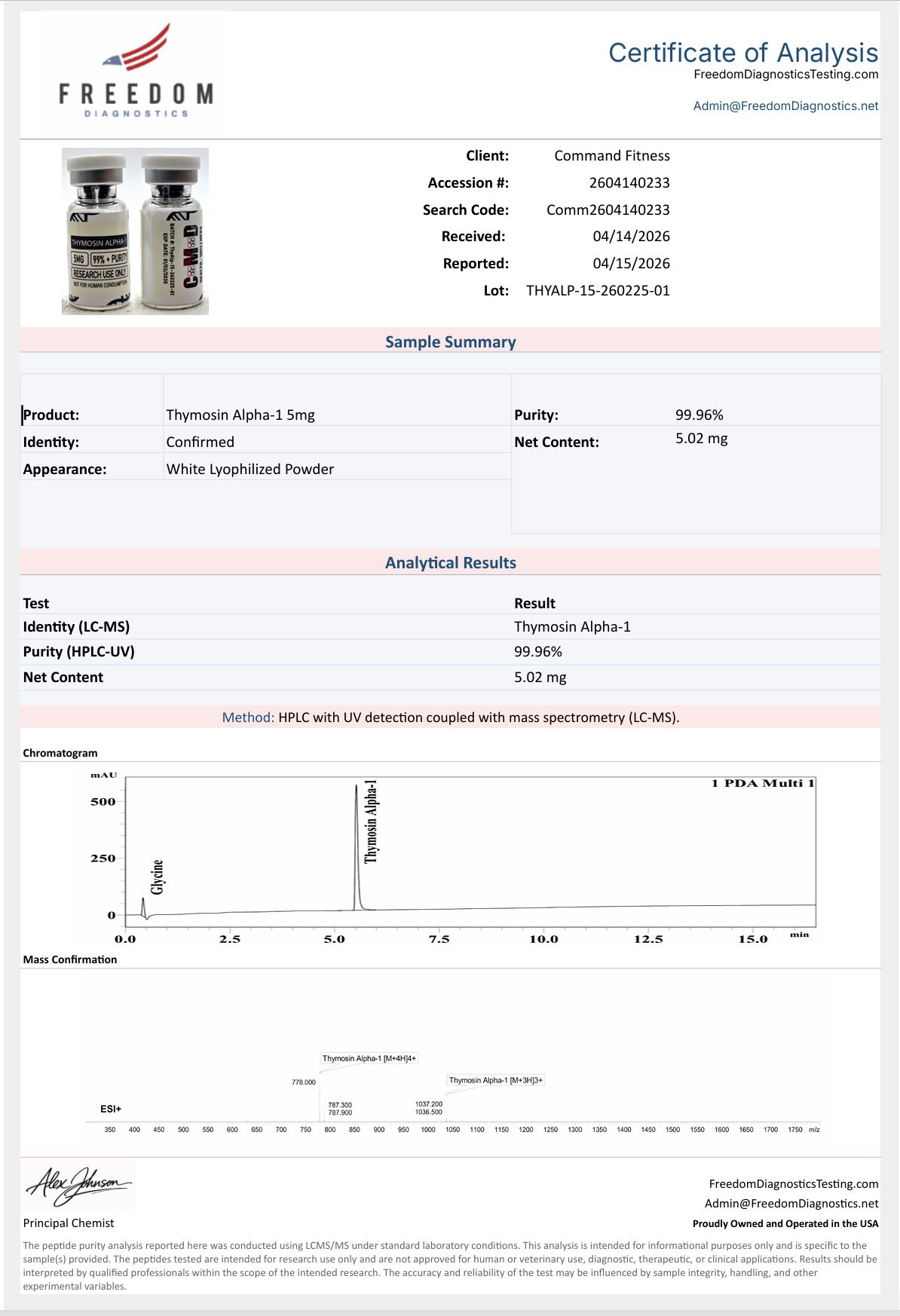
Tested by Freedom Diagnostics Testing @ Freedom Diagnostics Testing – Reliable. Accountable. Accessible.
Temperature: Store at −20 °C for long-term stability
Moisture Protection: Keep vial tightly sealed; use desiccant if available
Light Protection: Store in a dark or amber vial to prevent degradation
Handling: Minimize exposure to air during handling
Temperature: Store at 2–8 °C (refrigerated)
Aliquoting: Prepare small aliquots to avoid repeated freeze–thaw cycles
Usage: Use within validated stability timeframe, typically a few days depending on buffer and sterility
Sensitive to:
Heat
Moisture
Proteolytic degradation
Extreme pH
Lyophilized form is significantly more stable than solution form
Command Center is a leading provider of USA manufactured, research peptides.
Copyright 2026 © Command Center All Rights Reserved