

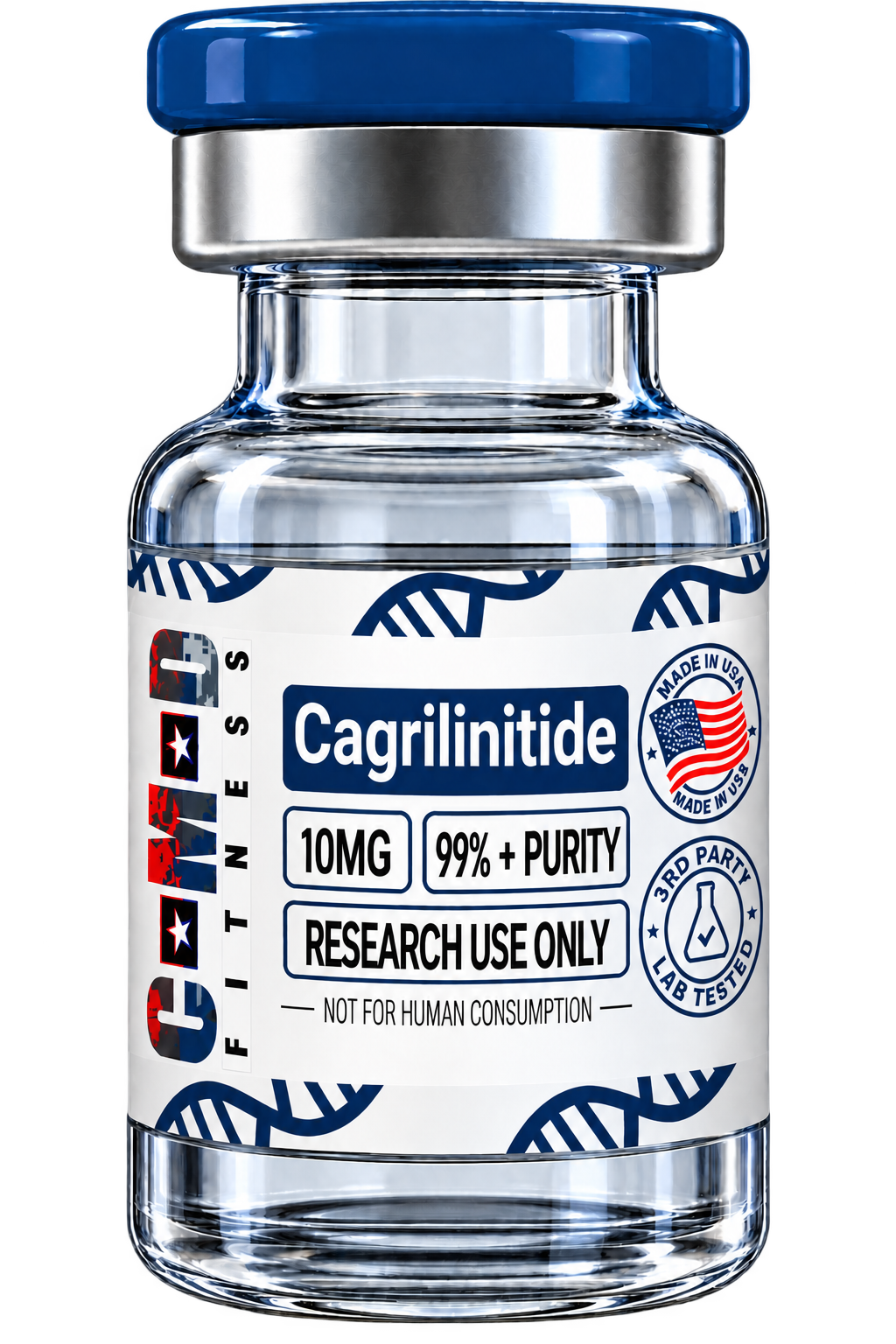

For research use only. Not for human consumption.
Cagrilintide is a long-acting synthetic peptide analogue of the hormone amylin, developed to suppress appetite, slow gastric emptying, and support weight loss and metabolic health. It is investigational and used in clinical research, often studied alone or in combination with GLP‑1 receptor.
Price:
$75.00 – $100.00Price range: $75.00 through $100.00
Select Quantity:
Type: Synthetic peptide
Analogue of: Human amylin hormone
Purpose: Extended half-life for once-weekly dosing
Mechanism: Binds amylin and calcitonin receptors in the brainstem
Formulation: Typically developed as an injectable peptide for research and clinical trials
Appetite Suppression: Activates amylin receptors in the area postrema and nucleus tractus solitarius, reducing food intake.
Slows Gastric Emptying: Delays food transit, increasing satiety.
Glucose Regulation: Helps suppress postprandial glucagon release, supporting better glycemic control.
Synergistic Effects: Can be combined with GLP‑1 receptor agonists (like semaglutide) for enhanced weight-loss effects.
Obesity Management: Studied for body weight reduction in overweight and obese individuals.
Metabolic Health: Evaluated for effects on insulin sensitivity, waist circumference, and cardiovascular risk markers.
Combination Therapy: Investigated in combination with GLP‑1 receptor agonists for additive weight-loss benefits.
Clinical Trials: Currently in Phase 2–3 trials; not yet FDA-approved.
Long-Acting Peptide: Structural modifications extend circulation time.
Dosing: Once-weekly injections in research settings.
Half-Life: Longer than native amylin, allowing durable receptor engagement.
Common Effects: Mild to moderate gastrointestinal symptoms (nausea, vomiting, diarrhea).
Investigational Status: Only studied under controlled clinical research; long-term safety not fully established.
Contraindications: Not approved for general clinical use; should not be used outside research protocols.
Cagrilintide is a long-acting amylin analogue peptide designed for weight management and metabolic improvement. It works by suppressing appetite, slowing gastric emptying, and modulating glucose metabolism. Research focuses on its use alone or in combination with GLP‑1 receptor agonists to maximize weight loss and metabolic benefits.
Type: Synthetic peptide analogue of human amylin
Length: Similar in size to amylin (~37 amino acids in native amylin; Cagrilintide has modifications to extend half-life)
Modifications: Structural alterations (such as acylation or amino acid substitutions) to increase stability, circulation time, and receptor binding
Amylin Receptor Agonist: Binds to amylin receptors (AMY1, AMY2, AMY3) and related calcitonin receptors
Secondary Structure: Likely adopts an α-helical conformation in solution, critical for receptor binding
Amphipathic Nature: Balanced hydrophilic and hydrophobic residues facilitate receptor interaction and solubility
Form: Lyophilized powder, water-soluble for injection
Stability: Stable when refrigerated; sensitive to heat and strong agitation
Extended Half-Life: Modifications allow once-weekly dosing in research settings
Satiety & Appetite Suppression: Activates brainstem receptors to reduce food intake
Gastrointestinal Modulation: Slows gastric emptying for prolonged fullness
Glucose Metabolism: Modulates postprandial glucagon release, aiding glycemic control
Potential Synergy: Works additively with GLP‑1 receptor agonists in metabolic research
Mechanism: Receptor agonism triggers intracellular signaling in neurons of the area postrema and nucleus tractus solitarius
Endocrine Impact: Influences hormones involved in satiety and glucose regulation
Research Relevance: Biochemical properties make it a valuable investigational peptide for studying obesity, appetite regulation, and metabolic disorders
Summary:
Cagrilintide is a synthetic, long-acting peptide analogue of amylin with α-helical structure, amphipathic properties, and receptor agonist activity. Its biochemical design enables appetite suppression, slowed gastric emptying, and glucose modulation, making it a key candidate in obesity and metabolic research.
Appetite Regulation: Studied for reducing food intake by activating amylin receptors in the brainstem.
Weight Loss Therapy: Clinical trials show significant body-weight reduction in overweight and obese individuals.
Combination Therapy: Often researched alongside GLP‑1 receptor agonists (e.g., semaglutide) for additive or synergistic weight-loss effects.
Glucose Regulation: Helps suppress postprandial glucagon release, improving blood glucose control.
Insulin Modulation: Works with insulin and other hormones to support metabolic homeostasis.
Cardiometabolic Research: Investigated for effects on waist circumference, triglycerides, and other metabolic markers.
Gastric Emptying: Slows transit of food from the stomach, prolonging satiety.
Digestive Studies: Used to understand the role of amylin pathways in gut–brain communication and nutrient sensing.
Long-Acting Peptide Design: Serves as a model for sustained-release amylin analogues.
Brainstem Receptor Studies: Helps elucidate neuronal circuits controlling appetite and feeding behavior.
Drug Development: Guides development of next-generation obesity and metabolic disease therapeutics.
Investigational Status: Not FDA-approved; used under controlled clinical research.
Primary Focus: Obesity, metabolic syndrome, and related endocrinology pathways.
Research Advantage: Long-acting properties allow once-weekly dosing, making it more convenient for clinical studies.
Summary:
Cagrilintide is primarily used in research as a long-acting amylin analogue to study weight loss, appetite regulation, gastric motility, and glucose metabolism, often in combination with other metabolic therapies.
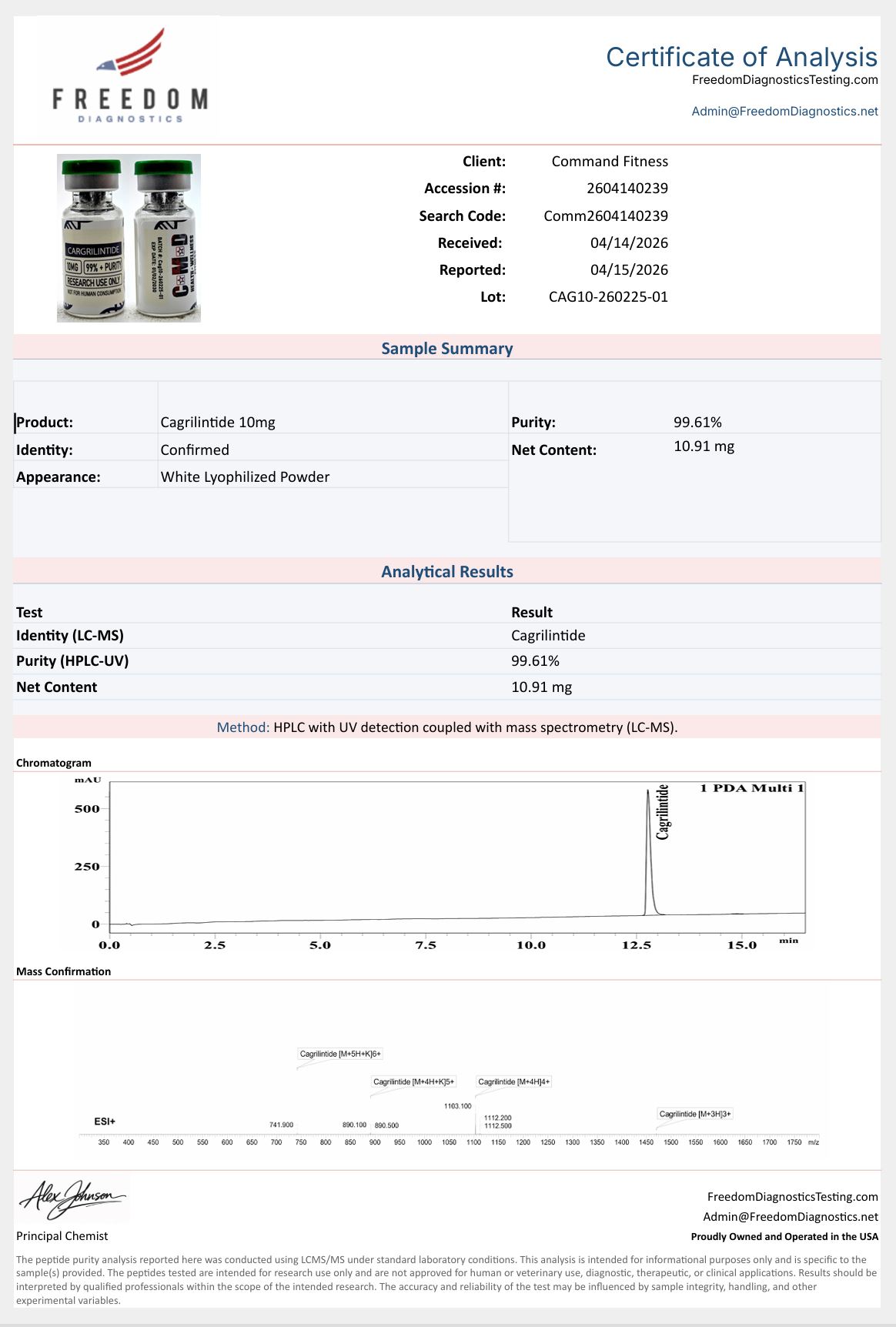
Tested by Freedom Diagnostics Testing @ Freedom Diagnostics Testing – Reliable. Accountable. Accessible.
Temperature: Store refrigerated at 2–8 °C (36–46 °F).
Light Protection: Keep away from direct light.
Moisture Protection: Keep in original sealed vial to prevent moisture exposure.
Shelf Life: Typically up to 24 months when stored properly.
Temperature:
Refrigerated: 2–8 °C, recommended for short-term use.
Room Temperature: Only for very brief periods (generally ≤24 hours).
Handling:
Use sterile syringes.
Avoid vigorous shaking; gently swirl to mix.
Appearance Check: Should be clear to slightly opalescent. Discard if cloudy or contains particulates.
Do not freeze reconstituted peptide; freezing may denature it.
Avoid heat and light exposure for both lyophilized and reconstituted forms.
Use promptly after reconstitution to maintain potency.
✅ Summary:
Cagrilintide is most stable as a refrigerated lyophilized powder. After reconstitution, it should be used immediately or stored refrigerated for a very short period to maintain activity.
Command Center is a leading provider of USA manufactured, research peptides.
Copyright 2026 © Command Center All Rights Reserved