

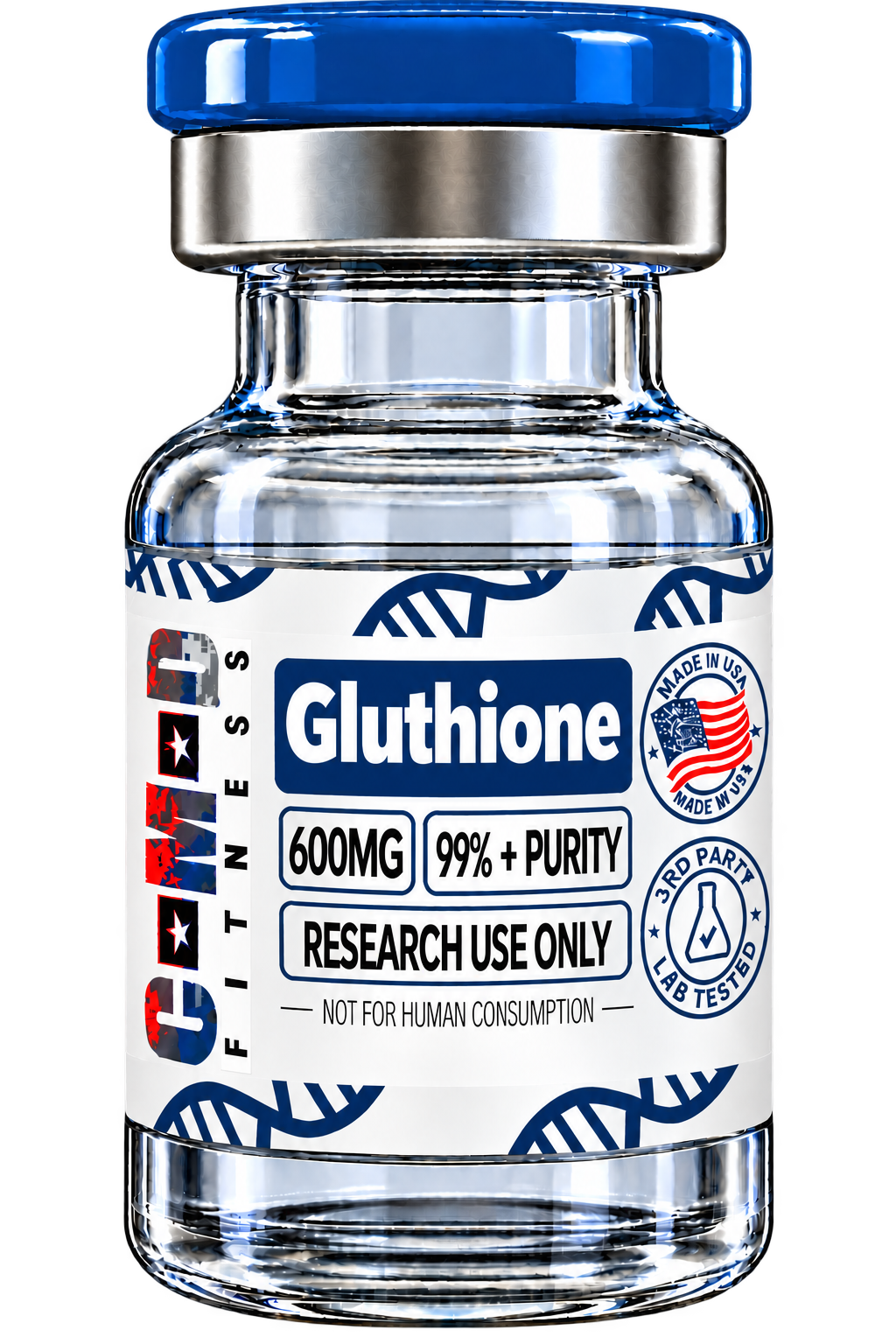

For research use only. Not for human consumption.
Glutathione (GSH) is a naturally occurring tripeptide composed of glutamate, cysteine, and glycine. It is a critical intracellular antioxidant that protects cells from oxidative stress, free radicals, and reactive oxygen species (ROS). Glutathione also plays a key role in detoxification, immune system regulation, and cellular metabolism.
Amino Acid Sequence: γ-L-Glutamyl-L-cysteinylglycine
Molecular Weight: ~307 Da
Form: Small, water-soluble peptide
Redox Forms: Exists in reduced (GSH) and oxidized (GSSG) states
Antioxidant Defense: Neutralizes free radicals and ROS
Detoxification: Conjugates with toxins via glutathione S-transferase (GST) pathways
Immune Support: Maintains lymphocyte function and overall immune response
Redox Balance: Maintains intracellular redox potential, protecting proteins and DNA
Metabolic Functions: Participates in amino acid transport and enzymatic reactions
Biomedical research: Studying oxidative stress, aging, neurodegenerative diseases, and detoxification
Cell culture studies: Protecting cells from oxidative damage in vitro
Regenerative research: Supporting mitochondrial function and cellular metabolism
Disease modeling: Investigating antioxidant therapy in liver, kidney, and neurodegenerative conditions
Glutathione is a critical endogenous tripeptide with potent antioxidant, detoxifying, and cellular protective properties. Its small, water-soluble structure allows it to modulate redox balance, protect cells from oxidative stress, and support immune and metabolic functions in research settings.
Price:
$80.00
Select Quantity:
12 in stock
Glutathione is a naturally occurring tripeptide composed of glutamate, cysteine, and glycine, and is a central intracellular antioxidant. It exists in reduced (GSH) and oxidized (GSSG) forms, helping maintain cellular redox balance, detoxify harmful compounds, and regulate immune and metabolic functions.
Redox Regulation: Protects cells from oxidative stress and free radical damage
Detoxification: Conjugates toxins and xenobiotics for safe removal
Immune Support: Enhances lymphocyte and macrophage activity
Metabolic Role: Cofactor for antioxidant enzymes like glutathione peroxidase and glutathione reductase
Cellular Protection: Maintains mitochondrial health and DNA/protein integrity
Oxidative stress and aging studies
Neurodegenerative disease models (e.g., Parkinson’s, Alzheimer’s)
Liver and kidney detoxification studies
Cell culture protection against ROS and free radicals
Glutathione is a critical tripeptide antioxidant and detoxifier widely studied in biochemistry, cellular biology, and disease models for its role in maintaining redox homeostasis, cellular protection, and immune function.
Type: Tripeptide
Amino Acid Sequence: γ-L-Glutamyl-L-cysteinyl-glycine
Molecular Weight: ~307 Da
Chemical Feature: Contains a thiol (-SH) group on cysteine crucial for antioxidant activity
Redox Forms:
Reduced (GSH): Active antioxidant
Oxidized (GSSG): Inactive dimer, reversible via glutathione reductase
Antioxidant Defense: Neutralizes reactive oxygen species (ROS) and free radicals
Detoxification: Conjugates toxins and xenobiotics via glutathione S-transferase (GST) pathways
Redox Regulation: Maintains intracellular redox potential, protecting DNA, proteins, and lipids
Immune Support: Enhances lymphocyte proliferation, macrophage activity, and cytokine response
Mitochondrial Protection: Maintains mitochondrial integrity under oxidative stress
Scavenging ROS: Protects cells from oxidative damage
Enzymatic Cofactor: Serves as cofactor for glutathione peroxidase (GPx) and glutathione reductase (GR)
Cellular Repair: Assists in repairing oxidized proteins and maintaining thiol balance
Signal Modulation: Modulates redox-sensitive signaling pathways involved in apoptosis and stress response
High Concentration: Liver, kidney, and red blood cells
Intracellular Location: Cytosol, mitochondria, and nucleus
Dynamic Balance: Constantly regenerated from GSSG by glutathione reductase to maintain cellular homeostasis
Depletion: Aging, oxidative stress, toxins, infections, and disease reduce GSH levels
Glutathione is a critical intracellular tripeptide antioxidant with regenerative, detoxifying, and redox-balancing properties. It protects cells from oxidative stress, supports immune function, maintains mitochondrial and nuclear health, and participates in detoxification pathways, making it essential for biomedical research in oxidative stress, aging, disease models, and cellular protection.
Investigating cellular redox balance
Studying reactive oxygen species (ROS) neutralization
Evaluating oxidative damage to DNA, proteins, and lipids
Aging models to assess antioxidant supplementation effects
Neurodegenerative disorders: Parkinson’s, Alzheimer’s, and Huntington’s disease
Liver and kidney injury: Detoxification and protection against chemical-induced damage
Cardiovascular research: Protection against oxidative stress in heart tissue
Diabetes and metabolic syndrome: Studies on oxidative damage and mitochondrial dysfunction
Cell culture protection against oxidative stress
Investigating thiol redox signaling pathways
Studying apoptosis, autophagy, and cell survival mechanisms
Gene expression modulation in response to oxidative environments
Studying glutathione S-transferase (GST) pathways
Evaluating xenobiotic and heavy metal conjugation
Models of chemical-induced toxicity and protective interventions
Investigating lymphocyte proliferation and macrophage function
Research on cytokine regulation under oxidative stress
Immune response modulation in infectious or inflammatory models
Glutathione is widely used in research to study oxidative stress, cellular protection, detoxification, immune modulation, and disease models. Its central role in redox balance and antioxidant defense makes it a critical molecule for biomedical, cellular, and molecular studies.
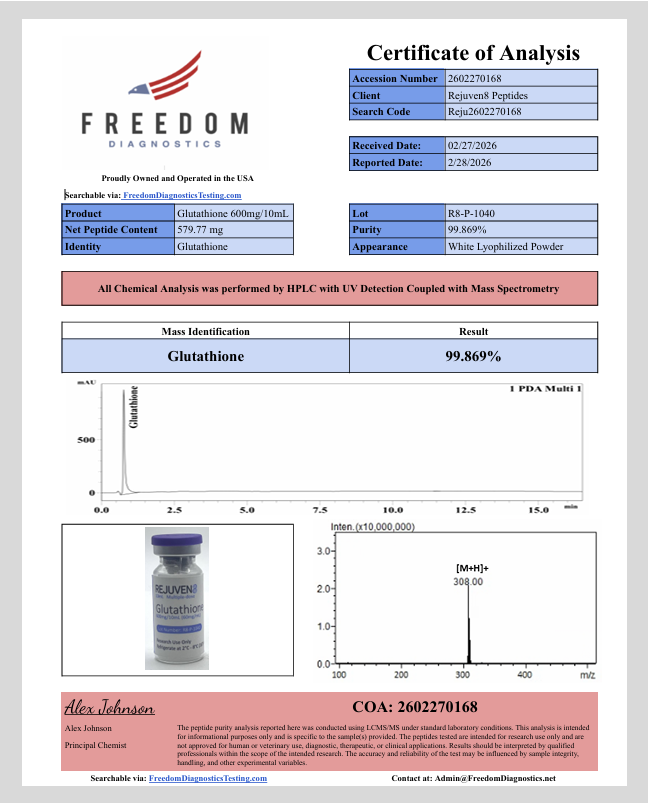
Tested by Freedom Diagnostics Testing @ Freedom Diagnostics Testing – Reliable. Accountable. Accessible.
Temperature: Store refrigerated at 2–8 °C (36–46 °F)
Light Protection: Keep protected from direct light
Moisture Protection: Store in original sealed vial
Freezing: Can be stored at −20 °C for long-term preservation
Shelf Life: Typically 12–24 months when stored properly
Diluent: Sterile water or appropriate buffer
Temperature: Refrigerate at 2–8 °C
Use Period: Recommended within 7–14 days
Handling: Gently swirl to dissolve; avoid vigorous shaking
Do NOT freeze after reconstitution
Inspect solution: should be clear, colorless, and particulate-free
Discard if cloudy, discolored, or precipitated
Use sterile technique for reconstitution and experimental application
Protect from heat, light, and prolonged air exposure
Glutathione is most stable in lyophilized powder form stored refrigerated or frozen. Once reconstituted, it should be kept cold, used promptly, and protected from light and oxidation to preserve its antioxidant activity for research purposes.
Command Center is a leading provider of USA manufactured, research peptides.
Copyright 2026 © Command Center All Rights Reserved