

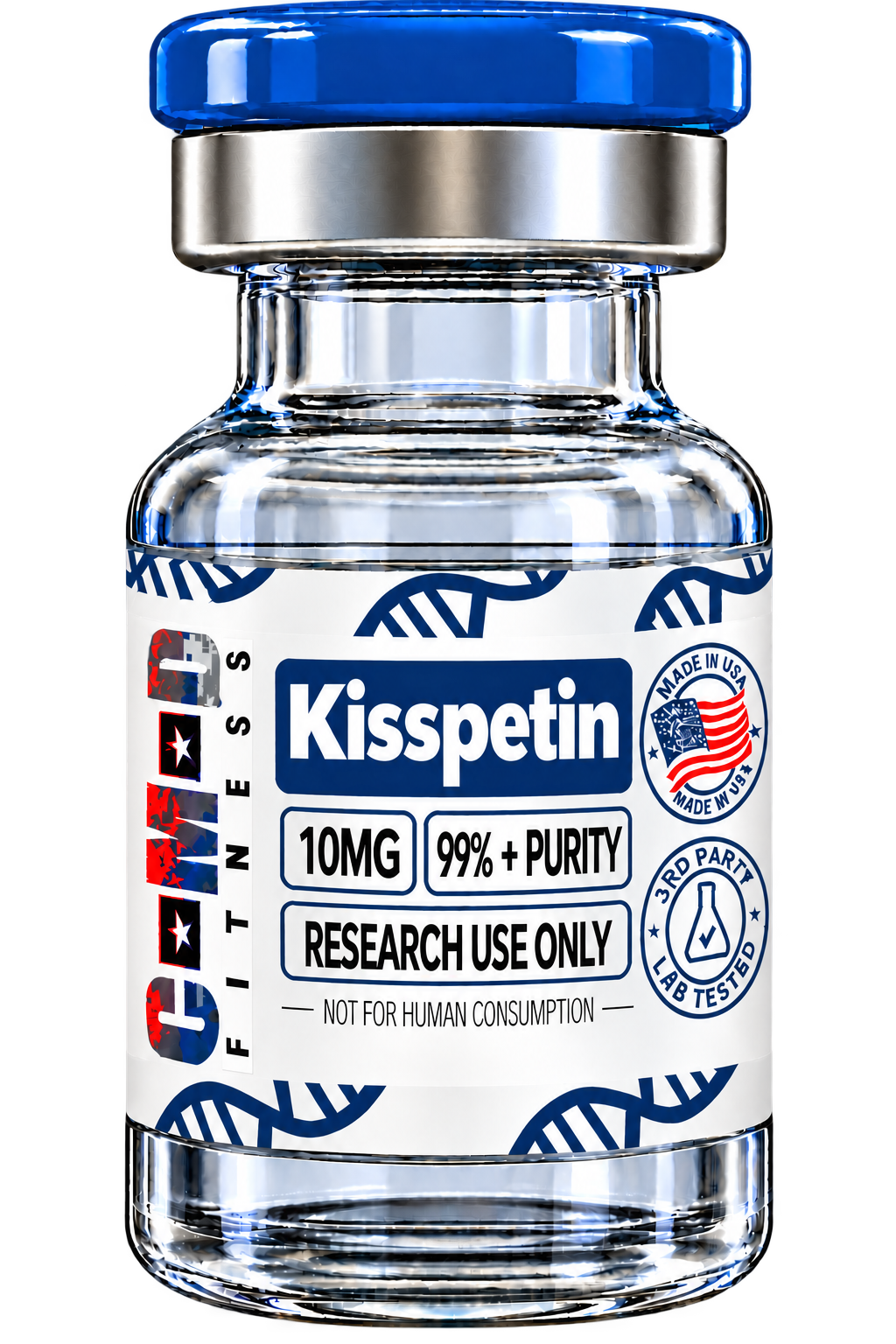

For research use only. Not for human consumption.
Kisspeptin is a naturally occurring peptide hormone that stimulates GnRH release, regulating luteinizing and follicle-stimulating hormone secretion and playing a key role in puberty, fertility, and reproductive hormone control.
Price:
$40.00
Select Quantity:
59 in stock
Kisspeptin is a peptide hormone that plays a central role in the regulation of the reproductive system. It binds to the GPR54 (Kiss1R) receptor in the hypothalamus to stimulate gonadotropin-releasing hormone (GnRH) secretion, which in turn controls the release of luteinizing hormone (LH) and follicle-stimulating hormone (FSH) from the pituitary gland.
Isoforms: Kisspeptin-10, Kisspeptin-13, Kisspeptin-54 (varying lengths and activity)
Mechanism: Activates the HPG (hypothalamic-pituitary-gonadal) axis
Role in Puberty: Initiates pubertal development
Fertility Regulation: Controls ovulation, sperm production, and reproductive hormone cycles
Metabolic Interaction: Links energy balance to reproductive function
Studying GnRH and LH/FSH regulation
Research on puberty onset and reproductive disorders
Exploring endocrine and metabolic interactions with fertility
Investigating potential therapeutic targets for reproductive dysfunction
Kisspeptin is a critical reproductive peptide that regulates the HPG axis, puberty, and fertility. Its action on GnRH release makes it a key tool in preclinical and laboratory studies of reproductive endocrinology and fertility research.
Type: Peptide hormone
Amino Acid Sequence: Varies by isoform
Kisspeptin-10: 10 amino acids
Kisspeptin-13: 13 amino acids
Kisspeptin-54: 54 amino acids
Molecular Weight: Approximately 1–6 kDa depending on isoform
Structure: Linear peptide; biologically active region at C-terminal
Receptor Target: GPR54 (Kiss1R), a G-protein coupled receptor in the hypothalamus
Hormone Release: Stimulates GnRH secretion, which triggers LH and FSH release
Signal Pathways: Activates PLC/PKC and intracellular calcium signaling, leading to GnRH neuron activation
Selectivity: Primarily regulates reproductive hormone pathways with minimal effect on other endocrine axes
Puberty Initiation: Critical for onset of puberty
Fertility Control: Regulates ovulation, spermatogenesis, and reproductive cycles
Energy-Reproduction Link: Integrates metabolic signals to reproductive hormone release
Cellular Effects: Influences GnRH neuron firing and intracellular signaling cascades
Water Soluble: Can be dissolved in aqueous solutions for research
Half-Life: Short in vivo; usually used in cell culture or experimental animal models
Handling Sensitivity: Sensitive to heat, pH extremes, and enzymatic degradation
Kisspeptin is a linear peptide hormone with isoform-specific amino acid sequences that activate the GPR54 receptor, stimulate GnRH release, and regulate the HPG axis. Its biochemical characteristics make it essential for research into puberty, fertility, reproductive endocrinology, and metabolic-reproductive interactions.
Studying the hypothalamic-pituitary-gonadal (HPG) axis
Investigating GnRH secretion mechanisms
Researching LH and FSH regulation in animal and cell models
Exploring pubertal onset mechanisms
Studying delayed or precocious puberty models
Evaluating Kisspeptin signaling in reproductive maturation
Investigating ovulation induction and spermatogenesis
Studying reproductive hormone cycles and fertility regulation
Researching potential therapeutic targets for infertility and reproductive disorders
Exploring the link between energy balance and reproductive function
Studying metabolic modulation of GnRH neurons
Evaluating stress or nutritional effects on reproductive hormone signaling
Kisspeptin is widely used in research to study GnRH signaling, puberty, fertility, and reproductive endocrinology, as well as the interaction between metabolism and reproduction. Its role as a key regulator of the HPG axis makes it a critical peptide for preclinical and laboratory studies.
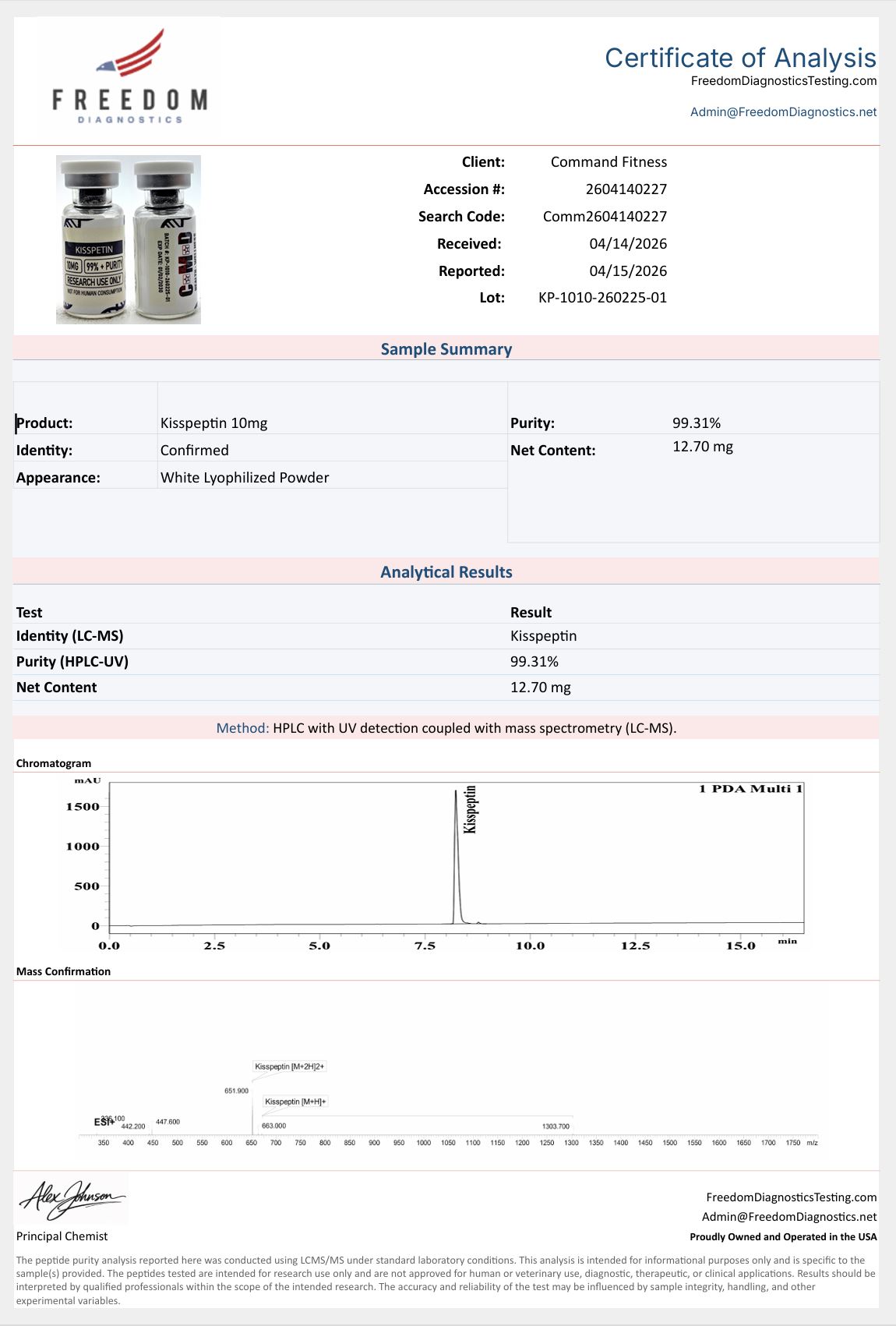
Tested by Freedom Diagnostics Testing @ Freedom Diagnostics Testing – Reliable. Accountable. Accessible.
Temperature: Store refrigerated at 2–8 °C (36–46 °F) for short-term use
Long-Term Storage: Freeze at −20 °C or lower to maintain stability
Light Protection: Keep protected from direct light
Moisture Protection: Maintain in original sealed vial
Shelf Life: Typically 12–24 months when stored properly
Diluent: Sterile water or bacteriostatic water
Temperature: Refrigerate at 2–8 °C
Use Period: Recommended within 7–14 days
Handling: Gently swirl to dissolve; avoid vigorous shaking
Do NOT freeze after reconstitution
Inspect solution before use: should be clear, colorless, and free of particulates
Discard if cloudy, discolored, or precipitated
Use sterile technique during reconstitution and experimental handling
Protect from heat, light, and mechanical agitation to maintain peptide integrity
Kisspeptin is most stable as a lyophilized powder stored refrigerated or frozen. Once reconstituted, it should be kept cold, used promptly, and protected from light and agitation to preserve biological activity for laboratory and research applications.
Command Center is a leading provider of USA manufactured, research peptides.
Copyright 2026 © Command Center All Rights Reserved