

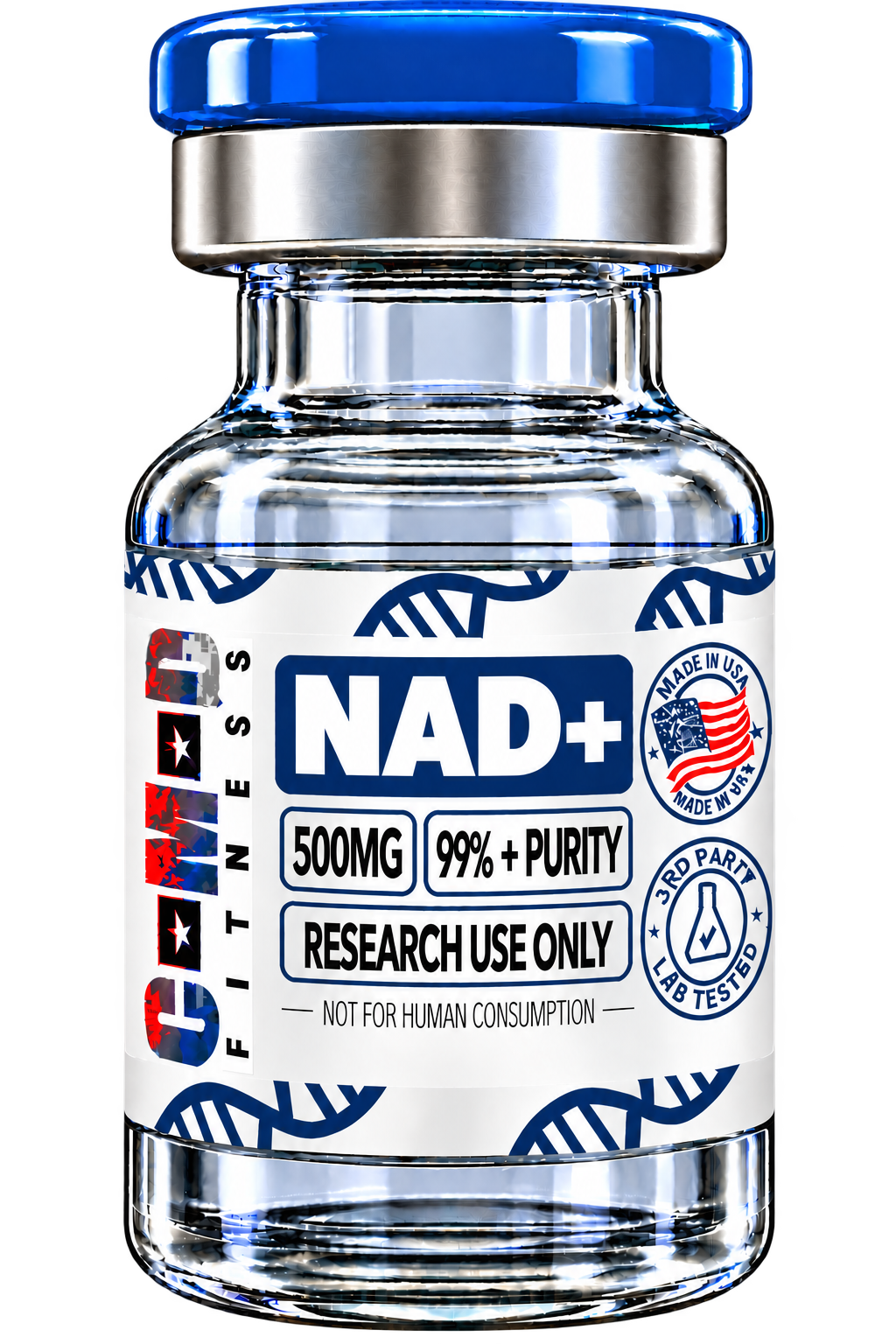

For research use only. Not for human consumption.
NAD⁺ (Nicotinamide Adenine Dinucleotide) is a vital cellular coenzyme that facilitates redox reactions, energy metabolism, and enzymatic regulation, playing a key role in mitochondrial function, DNA repair, and aging-related processes.
Price:
$110.00 – $195.00Price range: $110.00 through $195.00
Select Quantity:
NAD⁺ is a central coenzyme in cellular metabolism, found in all living cells. It exists in oxidized (NAD⁺) and reduced (NADH) forms, allowing it to act as an electron carrier in redox reactions essential for energy production. NAD⁺ is critical for glycolysis, the citric acid cycle, and oxidative phosphorylation, linking it directly to ATP generation. Beyond metabolism, NAD⁺ serves as a substrate for sirtuins and PARP enzymes, influencing DNA repair, gene expression, mitochondrial function, and cellular aging.
Type: Coenzyme / dinucleotide
Composition: Nicotinamide + ribose + adenine + phosphate groups
Molecular Weight: ~663.4 Da
Function: Electron transfer in redox reactions, enzymatic substrate for sirtuins and PARPs, and metabolic regulation
Solubility: Water-soluble, stable under proper storage
Studying cellular metabolism and energy production
Investigating mitochondrial function, oxidative stress, and aging
Research on DNA repair and genomic stability
Exploring metabolic and neurodegenerative diseases
NAD⁺ is a fundamental coenzyme that links energy metabolism, redox balance, and cellular signaling. Its dual role as an electron carrier and enzymatic substrate makes it indispensable in preclinical research on metabolism, aging, and mitochondrial biology.
Type: Coenzyme / dinucleotide
Composition: Nicotinamide, ribose, adenine, and two phosphate groups
Molecular Formula: C₂₁H₂₇N₇O₁₄P₂
Molecular Weight: ~663.4 Da
Redox Forms: Exists as oxidized NAD⁺ and reduced NADH
Structure: Linear dinucleotide capable of electron transfer in redox reactions
Electron Carrier: Transfers electrons in glycolysis, TCA cycle, and oxidative phosphorylation
Cofactor for Enzymes: Required for dehydrogenases and oxidoreductases
Substrate for Signaling Enzymes: Sirtuins, PARPs, CD38, and ADP-ribosyltransferases
Metabolic Role: Regulates energy production, redox balance, and cellular metabolism
Energy Homeostasis: Supports ATP generation via mitochondrial respiration
DNA Repair & Genomic Stability: Serves as substrate for PARP enzymes
Aging & Longevity: Activates sirtuins, promoting mitochondrial health and cellular resilience
Cellular Stress Response: Maintains redox balance and protects against oxidative stress
Water-Soluble: Easily dissolved in aqueous buffers for laboratory use
Stability: Sensitive to high heat, light, and extreme pH; requires proper storage
Reactivity: Participates in redox reactions and enzymatic NAD⁺-dependent modifications
NAD⁺ is a water-soluble dinucleotide coenzyme essential for redox reactions, energy metabolism, enzymatic regulation, and cellular signaling. Its biochemical properties—electron carrier capability, substrate for sirtuins and PARPs, and redox versatility—make it indispensable for research in metabolism, aging, mitochondrial function, and DNA repair.
Studying glycolysis, citric acid cycle (TCA), and oxidative phosphorylation
Investigating electron transport and ATP generation in mitochondria
Researching redox balance and NAD⁺/NADH ratio effects on metabolism
Examining sirtuin activation and mitochondrial function
Studying age-related decline in NAD⁺ levels and metabolic health
Researching therapeutic interventions to restore NAD⁺ for anti-aging effects
Investigating PARP-mediated DNA repair mechanisms
Studying response to oxidative stress and DNA damage
Researching cellular resilience and genomic integrity
Exploring NAD⁺ role in neuroprotection, Alzheimer’s, and Parkinson’s models
Studying metabolic disorders such as diabetes, obesity, and mitochondrial dysfunction
Investigating NAD⁺ precursors (NMN, NR) and supplementation effects
Studying sirtuin-dependent gene expression and epigenetic regulation
Investigating CD38-mediated NAD⁺ metabolism and calcium signaling
Exploring NAD⁺-dependent ADP-ribosylation pathways
NAD⁺ is a critical coenzyme and signaling molecule used in research on cellular metabolism, mitochondrial function, aging, DNA repair, neurodegeneration, and metabolic diseases. Its central role in energy production and enzymatic regulation makes it a key target for preclinical and laboratory studies.
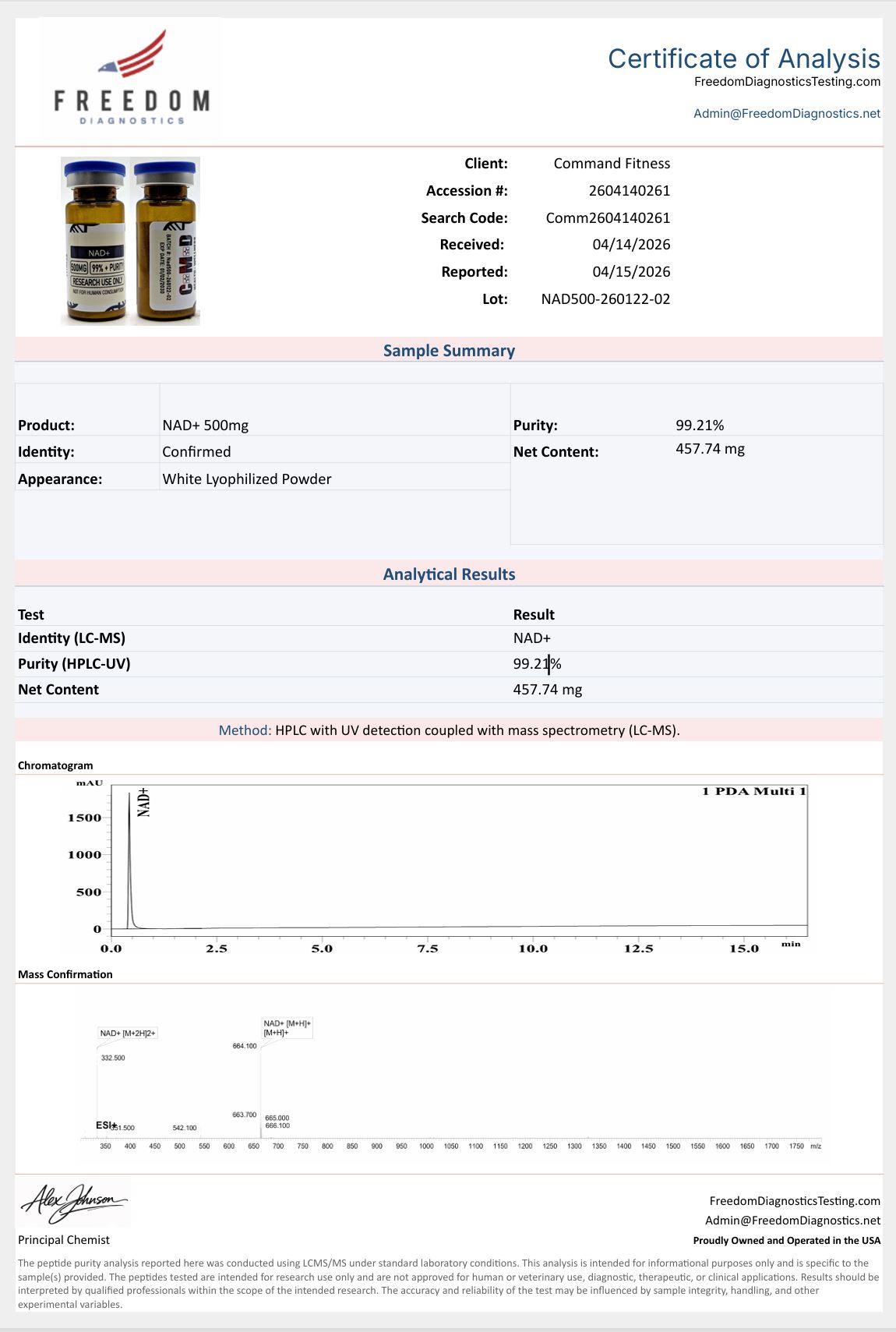
Tested by Freedom Diagnostics Testing @ Freedom Diagnostics Testing – Reliable. Accountable. Accessible.
Temperature: Store refrigerated at 2–8 °C (36–46 °F) for short-term use
Long-Term Storage: Freeze at −20 °C or lower for extended stability
Light Protection: Keep protected from direct light
Moisture Protection: Store in tightly sealed, dry containers
Shelf Life: Typically 12–24 months if stored properly
Solvent: Dissolve in sterile water or buffered aqueous solutions
Temperature: Store refrigerated at 2–8 °C
Use Period: Recommended within 1–2 weeks to maintain activity
Handling: Avoid repeated freeze-thaw cycles
Light Protection: Keep shielded from light
Inspect before use: should be clear, colorless, and free of particulates
Discard if discolored, cloudy, or precipitated
Use sterile techniques for reconstitution and handling
Avoid high heat, extreme pH, and prolonged light exposure
NAD⁺ is most stable as a solid stored refrigerated or frozen. Once dissolved, it should be kept cold, protected from light, and used promptly to preserve biochemical activity for research applications in cellular metabolism, DNA repair, and mitochondrial studies.
Command Center is a leading provider of USA manufactured, research peptides.
Copyright 2026 © Command Center All Rights Reserved