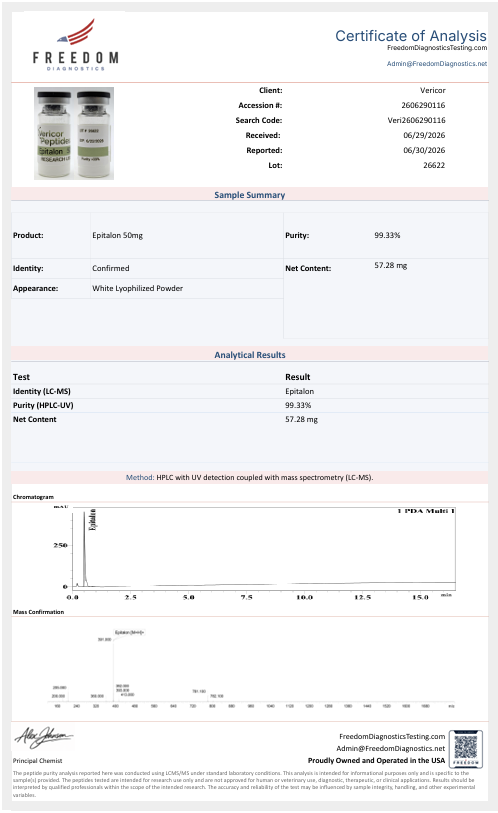

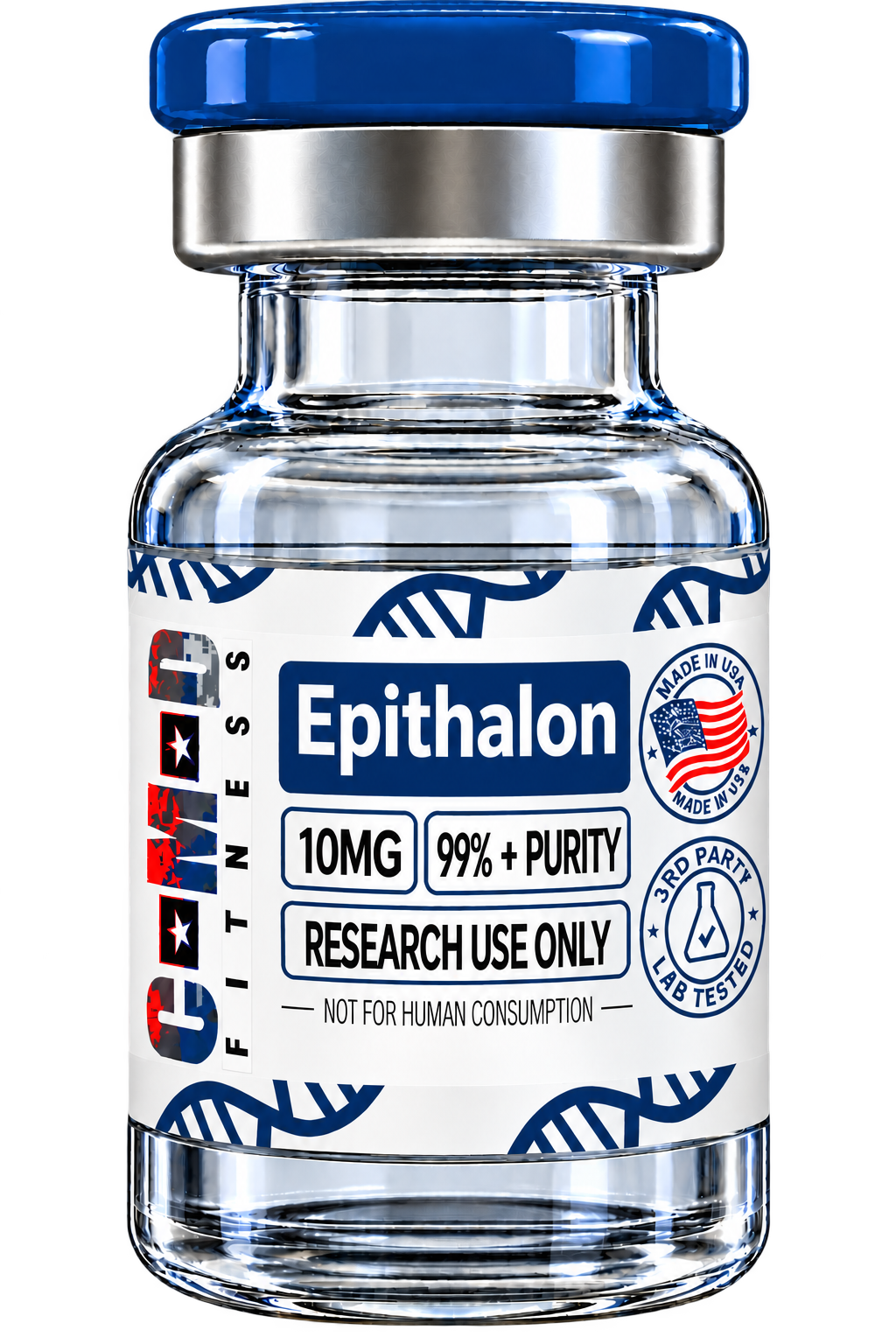

Epithalon is a synthetic tetrapeptide (Ala-Glu-Asp-Gly) derived from the naturally occurring pineal peptide epithalamin. It is primarily studied for its potential anti-aging and longevity-promoting effects in experimental research.
Key Points:
-
Mechanism of Action: Believed to activate telomerase, helping maintain telomere length, and modulate cellular senescence.
-
Endocrine Effects: May influence pineal gland function, melatonin production, and circadian rhythm regulation.
-
Research Applications: Anti-aging studies, cellular senescence research, oxidative stress models, and experimental endocrine modulation.
-
Structure & Properties: Small, linear, water-soluble tetrapeptide with rapid cellular uptake; sensitive to heat, light, and enzymatic degradation.
-
Status: Investigational; not FDA-approved for clinical use.
Summary
Epithalon acts as a regulatory peptide targeting aging-related pathways, primarily through telomerase activation and pineal gland modulation, making it a widely studied compound in experimental longevity and cellular biology research.