

Veteran-owned business
Product Usage: This PRODUCT IS INTENDED AS A RESEARCH CHEMICAL ONLY. This designation allows the use of research chemicals strictly for in vitro testing and laboratory experimentation only. All product information available on this website is for educational purposes only. Bodily introduction of any kind into humans or animals is strictly forbidden by law. This product should only be handled by licensed, qualified professionals. This product is not a drug, food, or cosmetic and may not be misbranded, misused or mislabeled as a drug, food or cosmetic.

For research use only. Not for human consumption.

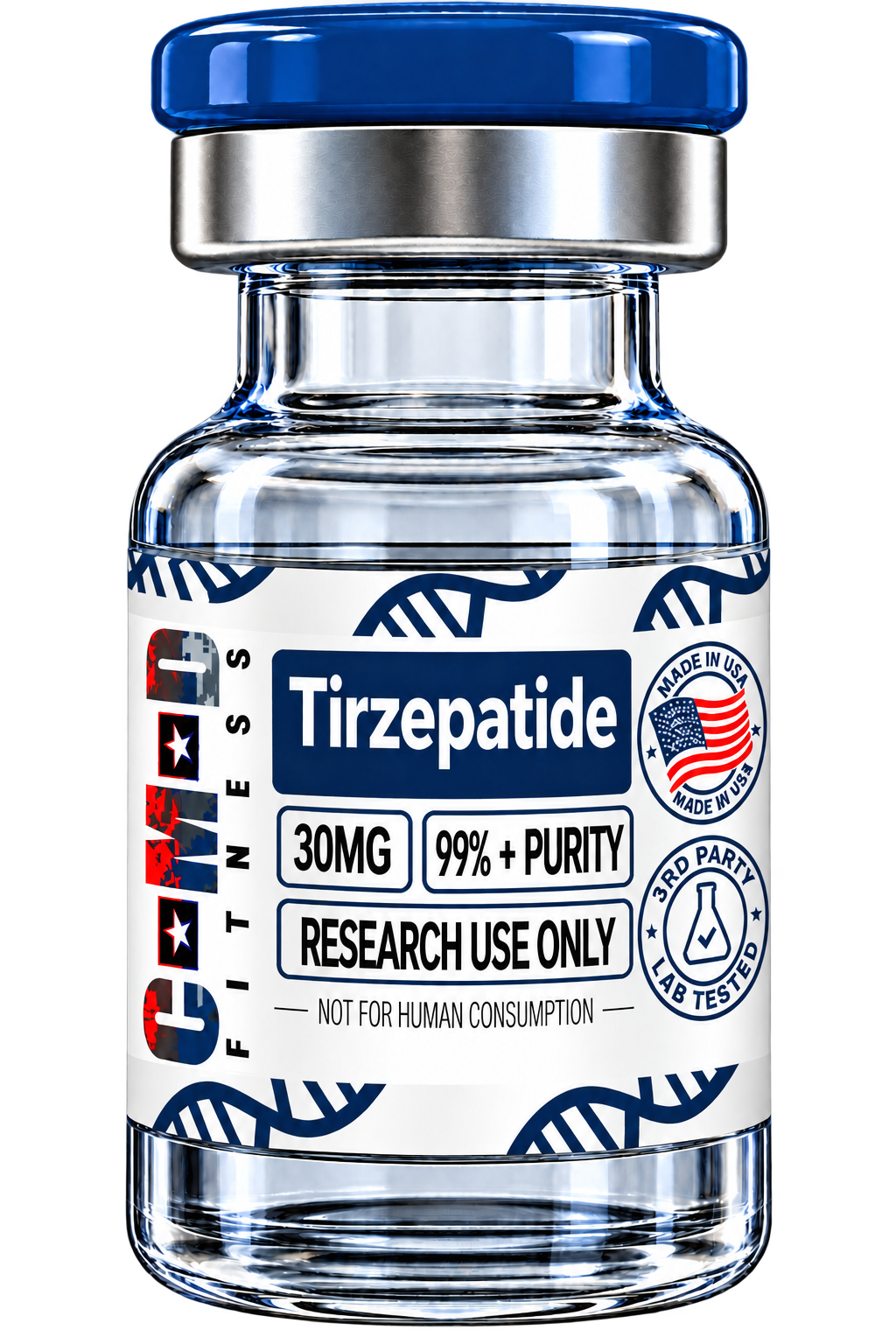
TIRZ (10mg/15mg/30mg/50mg)

Retatrutide is an investigational triple-agonist peptide that simultaneously targets GLP‑1, GIP, and glucagon receptors to promote weight loss, improved insulin sensitivity, and enhanced metabolic regulation in research and clinical studies.

Price:

Price range: $115.00 through $400.00

Select Quantity:

Overview

Tirz is a synthetic, long-acting 39-amino-acid peptide that acts as a dual agonist of the glucose-dependent insulinotropic polypeptide (GIP) receptor and glucagon-like peptide-1 (GLP-1) receptor. By engaging both incretin pathways, tirzepatide influences multiple biological processes involved in glucose homeostasis, appetite signaling, insulin function, and energy metabolism.

Tirzepatide’s molecular structure incorporates modifications that increase resistance to enzymatic degradation and a fatty-acid-containing side chain that promotes albumin binding, contributing to its prolonged biological activity.

Key areas associated with tirzepatide research include:

  • GIP and GLP-1 receptor signaling
  • Glucose-dependent insulin secretion
  • Insulin sensitivity and glucose homeostasis
  • Appetite, satiety, and energy-intake pathways
  • Body-weight and body-composition regulation
  • Adipose-tissue and lipid metabolism
  • Metabolic and cardiovascular risk factors
  • Type 2 diabetes and obesity-related metabolic pathways

Tirz is also the active pharmaceutical ingredient in FDA-approved prescription medicines. Research-grade tirz is not equivalent to an FDA-approved finished drug product and should not be represented as such.

For research and laboratory applications only. Not for human consumption.

Biochemical
Characteristics

Tirz is a synthetic, long-acting 39-amino-acid peptide engineered to function as a dual agonist of the glucose-dependent insulinotropic polypeptide (GIP) receptor and glucagon-like peptide-1 (GLP-1) receptor. Its biochemical design combines incretin-receptor activity with structural modifications that extend biological persistence.

Key biochemical characteristics include:

  • Dual Incretin-Receptor Agonism: Activates both GIP and GLP-1 receptors, which are class B G-protein-coupled receptors involved in metabolic regulation.
  • cAMP Signaling: Activation of GIP and GLP-1 receptors stimulates intracellular cyclic adenosine monophosphate (cAMP) signaling and downstream pathways involved in cellular metabolic responses.
  • Glucose-Dependent Insulin Signaling: Receptor activation enhances pancreatic beta-cell insulin secretion in a glucose-dependent manner.
  • Glucagon Regulation: GLP-1 receptor signaling can influence glucagon secretion depending on metabolic and glucose conditions.
  • Appetite & Satiety Signaling: Incretin-receptor activity influences central nervous system pathways associated with appetite, satiety, and energy intake.
  • Gastric Function: GLP-1 receptor activity can slow gastric emptying, particularly during early treatment exposure.
  • Lipid Modification: Tirzepatide contains a C20 fatty diacid-containing side chain that promotes reversible albumin binding and reduces renal clearance.
  • Extended Biological Persistence: Structural modifications and albumin association contribute to an elimination half-life of approximately 5 days in humans.
  • Enzymatic Stability: The peptide incorporates modifications that increase resistance to degradation by dipeptidyl peptidase-4 (DPP-4) compared with endogenous incretin hormones.
  • Metabolic Signaling: Its combined receptor activity is associated with pathways governing glucose homeostasis, insulin sensitivity, nutrient utilization, adipose-tissue biology, and energy balance.

These biochemical characteristics distinguish Tirzepatide from selective GLP-1 receptor agonists by combining GIP and GLP-1 receptor signaling within a single long-acting peptide molecule.

For research and laboratory applications only. Not for human consumption.

Research Applications

Tirz is extensively studied in metabolic and endocrine research because of its combined activity at the glucose-dependent insulinotropic polypeptide (GIP) receptor and glucagon-like peptide-1 (GLP-1) receptor. Its dual-incretin mechanism provides a valuable model for investigating interconnected pathways involved in glucose regulation, energy balance, appetite, and metabolic function.

Key research applications include:

  • Glucose Homeostasis: Investigation of mechanisms controlling circulating glucose concentrations and metabolic responses to nutrient intake.
  • Insulin Secretion: Research examining glucose-dependent pancreatic beta-cell insulin secretion and incretin-mediated signaling.
  • Insulin Sensitivity: Studies investigating changes in insulin responsiveness and metabolic function.
  • GIP & GLP-1 Receptor Signaling: Examination of the individual and combined effects of activating these two incretin-receptor pathways.
  • Appetite & Satiety Research: Investigation of central and peripheral signaling mechanisms involved in hunger, satiety, food intake, and energy balance.
  • Body-Weight Regulation: Clinical and experimental research examining changes in body weight, body composition, and adiposity.
  • Adipose-Tissue Metabolism: Studies evaluating lipid storage, mobilization, adipocyte function, and metabolic signaling within adipose tissue.
  • Lipid Metabolism: Investigation of triglycerides, cholesterol-related parameters, fatty-acid metabolism, and other metabolic biomarkers.
  • Gastric & Gastrointestinal Physiology: Research examining gastric emptying, nutrient absorption, and gastrointestinal signaling associated with incretin-receptor activation.
  • Type 2 Diabetes Research: Extensive clinical investigation of glycemic control and other metabolic outcomes in individuals with type 2 diabetes.
  • Obesity Research: Investigation of chronic weight management and obesity-associated metabolic abnormalities.
  • Cardiometabolic Research: Studies examining cardiovascular risk factors and cardiovascular outcomes associated with metabolic improvement.
  • Metabolic Liver Research: Investigation of liver fat, hepatic metabolism, and metabolic dysfunction-associated steatotic liver disease.

Tirz provides an important research platform for understanding how simultaneous GIP and GLP-1 receptor activation influences glucose metabolism, insulin signaling, appetite regulation, adipose biology, and systemic metabolic health.

Note: Tirz is also an active ingredient in FDA-approved prescription medications. Research-grade material is not equivalent to an FDA-approved finished pharmaceutical product.

For research and laboratory applications only. Not for human consumption.
Chemical Properties

Tirz is a synthetic, long-acting peptide engineered as a dual agonist of the glucose-dependent insulinotropic polypeptide (GIP) receptor and glucagon-like peptide-1 (GLP-1) receptor. Its molecular design incorporates amino-acid substitutions and lipidation to increase enzymatic stability and prolong systemic exposure.

  • Compound Name: Tirz
  • Compound Class: Synthetic peptide / dual GIP and GLP-1 receptor agonist
  • Peptide Length: 39 amino acids
  • Molecular Formula: C₂₂₅H₃₄₈N₄₈O₆₈
  • Molecular Weight: Approximately 4,813.45 g/mol (4.81 kDa)
  • CAS Number: 2023788-19-2
  • Structure: Linear peptide containing engineered amino-acid substitutions and a lipid-containing side chain
  • Lipid Modification: Contains a C20 fatty diacid moiety attached through a linker, promoting reversible binding to serum albumin
  • Primary Molecular Targets: GIP receptor (GIPR) and GLP-1 receptor (GLP-1R)
  • Receptor Classification: Class B G-protein-coupled receptors (GPCRs)
  • Primary Signaling Pathway: Receptor activation stimulates adenylyl cyclase and intracellular cyclic AMP (cAMP) signaling.
  • Protein Binding: High albumin association resulting from its lipid modification contributes to prolonged systemic persistence.
  • Elimination Half-Life: Approximately 5 days in humans
  • Physical Appearance: Research-grade material is commonly supplied as a white to off-white lyophilized peptide powder.
  • Solubility: Solubility depends on pH, concentration, counterions, and formulation; appropriately formulated aqueous buffers are generally used for laboratory applications.
  • Stability: Sensitive to conditions that can degrade peptides, including excessive heat, moisture, oxidation, inappropriate pH, and repeated freeze-thaw cycles.
  • Biochemical Stability: Engineered for increased resistance to enzymatic degradation, including degradation by DPP-4, relative to naturally occurring incretin peptides.

Tirz’s combination of dual incretin-receptor activity, structural modification, lipidation, and albumin binding distinguishes it from conventional selective GLP-1 receptor agonists and contributes to its prolonged pharmacological activity.

Note: Tirz is the active ingredient in FDA-approved prescription medicines. Research-grade tirzepatide is not equivalent to an FDA-approved finished pharmaceutical product.

For research and laboratory applications only. Not for human consumption.

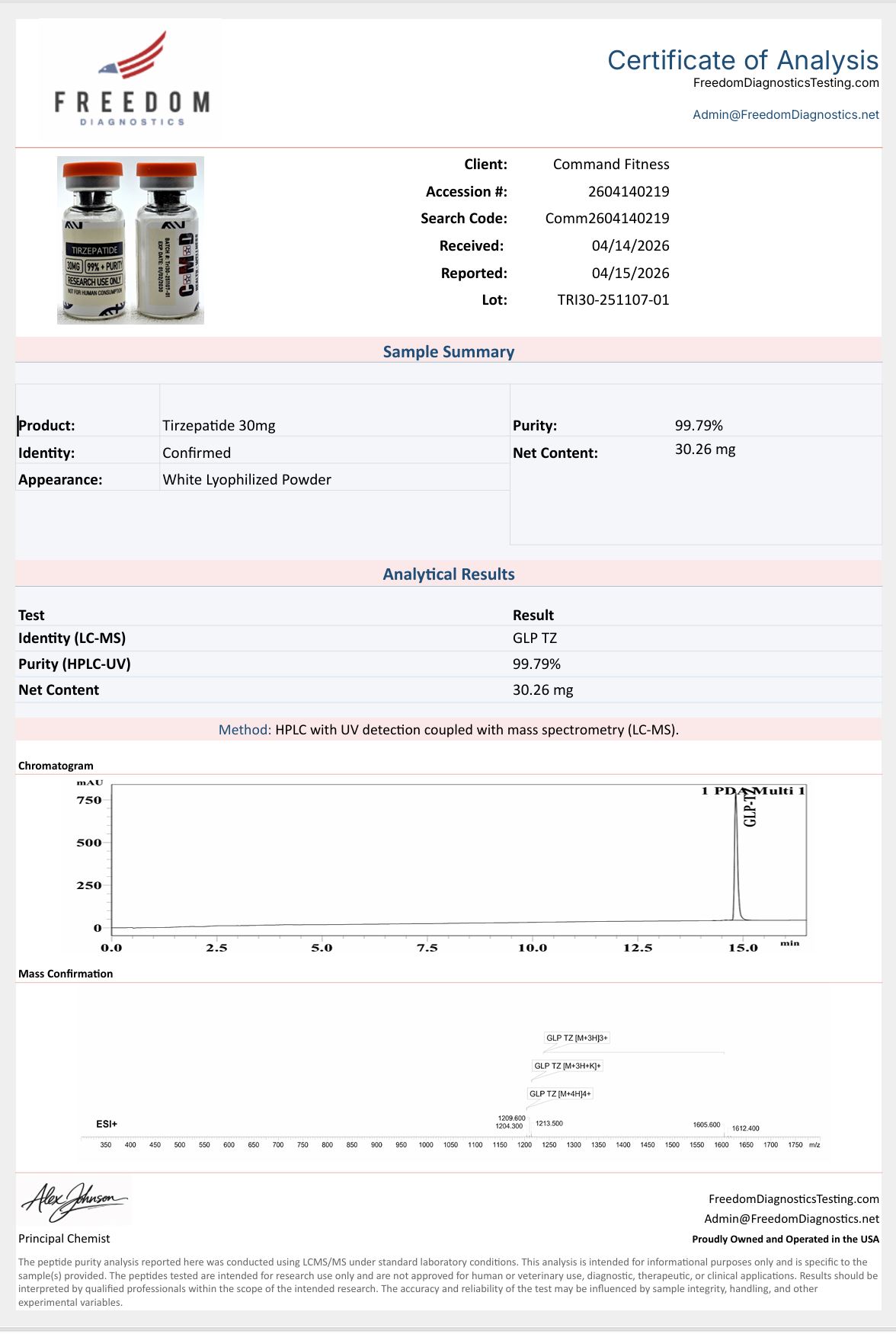
COA /HPLC / MS


3rd Party Testing
Storage

Tirz should be stored under controlled conditions to help preserve peptide stability, purity, and structural integrity.

  • Lyophilized Powder: For long-term laboratory storage, typically store at −20°C (−4°F) or colder when supported by the supplier’s stability data.
  • Short-Term Lyophilized Storage: Refrigeration at 2°C–8°C (36°F–46°F) may be appropriate when validated for the specific research formulation.
  • Reconstituted Material: Typically requires refrigeration at 2°C–8°C (36°F–46°F); however, stability and allowable storage duration depend on the diluent, pH, concentration, sterility, preservatives, and formulation.
  • Protect From Light: Keep containers protected from direct sunlight and prolonged light exposure.
  • Protect From Moisture: Keep lyophilized material tightly sealed and minimize exposure to humidity.
  • Avoid Excessive Heat: Elevated temperatures can accelerate peptide degradation.
  • Freeze-Thaw Protection: Avoid repeated freeze-thaw cycles, which may adversely affect peptide integrity.
  • Visual Inspection: Solutions showing unexpected cloudiness, discoloration, precipitation, or particulate matter should not be used for research.
  • Handling: Follow appropriate laboratory procedures to minimize contamination and unnecessary environmental exposure.

Because research-grade tirzepatide formulations vary, the supplier’s product label, COA, and validated stability data should always take precedence over generalized peptide-storage recommendations.

Important: FDA-approved tirzepatide products have their own manufacturer-specified storage requirements and should be stored according to their official prescribing information. Research-grade material should not be represented as equivalent to an FDA-approved finished pharmaceutical product.

For research and laboratory applications only. Not for human consumption.

Your cart is currently empty.

Return to shop

SKU N/A Categories , ,
0