

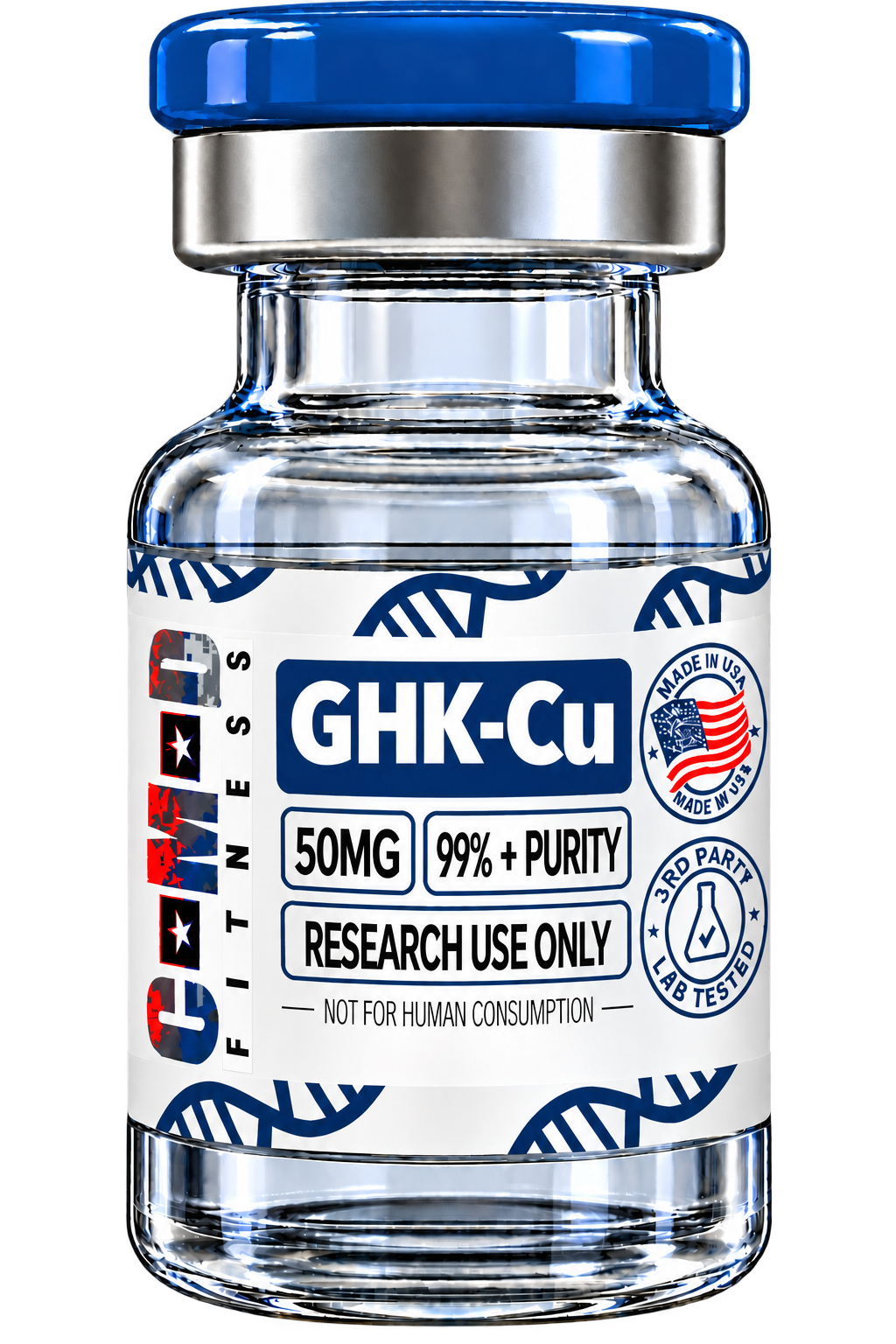

For research use only. Not for human consumption.
GHK-Cu is a naturally occurring tripeptide–copper complex (Gly-His-Lys + Cu²⁺) known for its regenerative, tissue-repair, and anti-aging properties, including stimulation of collagen and elastin synthesis, wound healing, and skin remodeling. It is primarily used in research and experimental studies.
Price:
$95.00
Select Quantity:
74 in stock
GHK-Cu (Glycyl-L-Histidyl-L-Lysine Copper Complex) is a naturally occurring tripeptide that binds copper ions, forming a biologically active complex involved in tissue repair, regeneration, and skin remodeling. It was first identified in human plasma and is found in high concentrations in young, healthy tissue, with levels declining with age.
Peptide Sequence: Gly-His-Lys
Copper Complex: Cu²⁺ binding enhances stability and bioactivity
Functions: Promotes collagen and elastin synthesis, wound healing, hair growth, antioxidant activity, and gene modulation
Applications: Anti-aging research, skin regeneration studies, wound healing models, and hair follicle stimulation
Regulates gene expression related to tissue repair and extracellular matrix production
Enhances cell proliferation and angiogenesis
Reduces inflammation and oxidative stress in damaged tissues
GHK-Cu is a small, naturally occurring tripeptide–copper complex with potent regenerative, anti-aging, and tissue-repair properties, making it a key focus in cosmetic, dermatological, and regenerative medicine research.
Type: Tripeptide
Amino Acid Sequence: Glycine–Histidine–Lysine (Gly-His-Lys, GHK)
Copper Binding: Forms a complex with Cu²⁺ ions, essential for biological activity
Molecular Weight: ~340–345 Da (varies with copper binding)
Structure: Linear, small, water-soluble peptide
Solubility: Highly soluble in water
Charge: Positively charged at physiological pH due to lysine residue
Stability: Copper binding enhances peptide stability and protects against enzymatic degradation
pI (Isoelectric Point): Slightly basic due to lysine residue
Tissue Repair: Stimulates collagen, elastin, and glycosaminoglycan synthesis
Gene Modulation: Regulates expression of genes involved in cell proliferation, angiogenesis, and extracellular matrix remodeling
Anti-Inflammatory & Antioxidant: Reduces oxidative stress and inflammation in tissues
Hair Growth: Promotes hair follicle activation and keratinocyte proliferation
Small size allows rapid diffusion and tissue penetration
Copper complex stabilizes peptide and enhances bioactivity in extracellular matrix and cell signaling pathways
Linear and amphipathic structure facilitates interaction with cellular receptors and extracellular matrix proteins
GHK-Cu is a small, linear tripeptide bound to copper, giving it enhanced stability and potent regenerative activity. Biochemically, it is involved in tissue repair, collagen and elastin synthesis, gene modulation, antioxidant protection, and hair follicle stimulation, making it a widely studied peptide in cosmetic, dermatological, and regenerative medicine research.
Studied for collagen and elastin synthesis in skin
Promotes wound healing and tissue remodeling
Reduces wrinkle formation, skin sagging, and age-related damage
Investigated in cosmetic and dermatological research
Enhances angiogenesis, fibroblast proliferation, and extracellular matrix deposition
Used in experimental models of burns, cuts, and ulcers
Supports accelerated recovery in tissue injury models
Promotes hair follicle activation and keratinocyte proliferation
Studied for androgenic alopecia and hair regeneration in preclinical research
Modulates oxidative stress pathways
Reduces inflammation in damaged tissues
Explored in models of chronic tissue damage or aging-related inflammation
Influences gene expression related to tissue repair, extracellular matrix, and cell proliferation
Used to study peptide-mediated regenerative therapies
Explored in preclinical tissue engineering and cellular rejuvenation models
GHK-Cu is widely used in research to study skin and tissue regeneration, anti-aging mechanisms, hair growth, wound healing, and gene modulation. Its copper-bound tripeptide structure makes it highly effective in promoting collagen synthesis, angiogenesis, and extracellular matrix remodeling, making it a key focus in dermatological and regenerative medicine research.
Chemical Name: Glycyl-L-Histidyl-L-Lysine Copper(II) Complex
Common Names: GHK-Cu, Copper Peptide, Copper Tripeptide-1
Because of its small molecular size and water solubility, GHK-Cu is frequently used in serums, topical solutions, and regenerative research compounds.
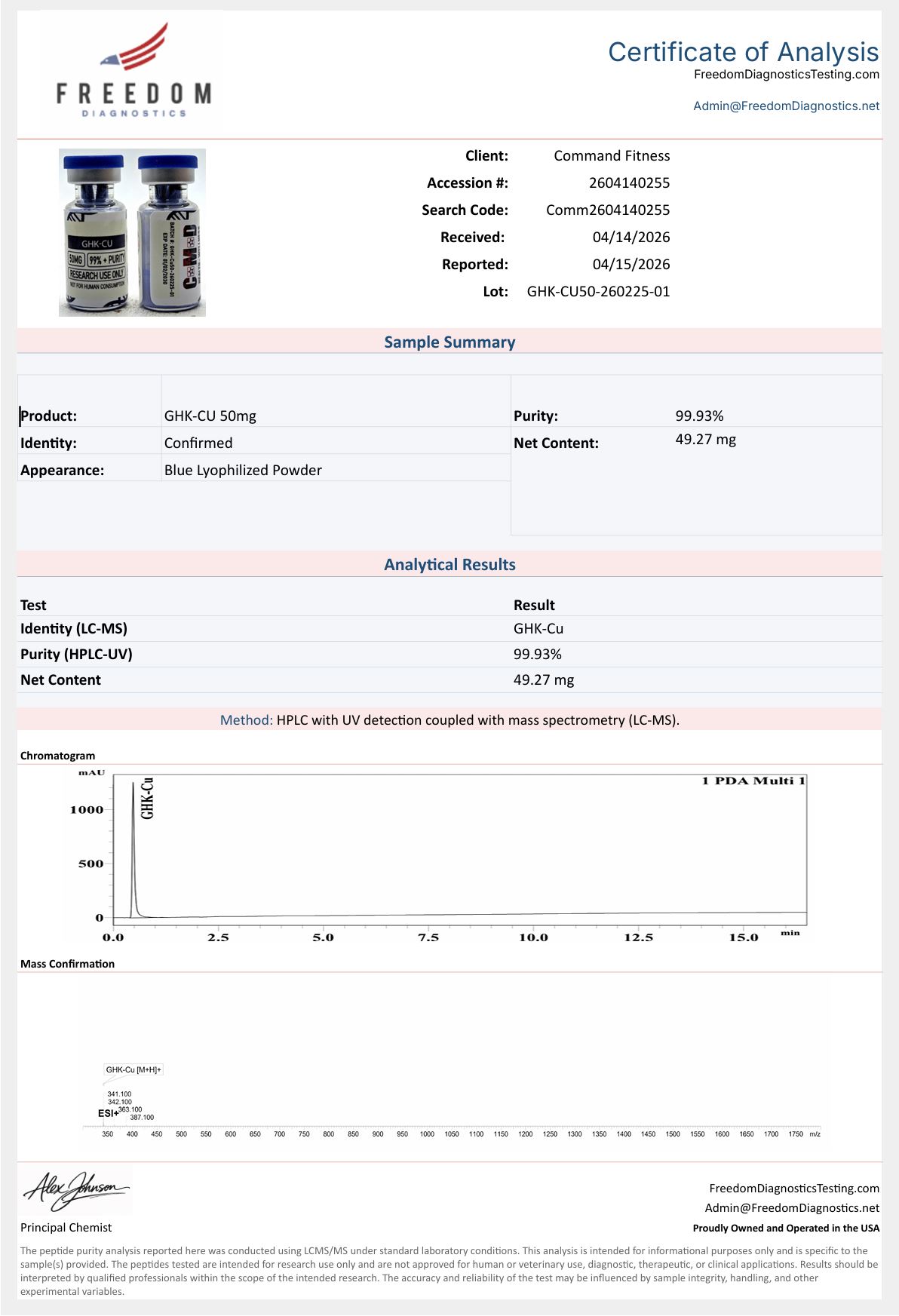
Tested by Freedom Diagnostics Testing @ Freedom Diagnostics Testing – Reliable. Accountable. Accessible.
Temperature: Store refrigerated at 2–8 °C (36–46 °F)
Light Protection: Keep protected from direct light
Moisture Protection: Store in the original sealed vial
Freezing: Can be stored at −20 °C for long-term storage
Shelf Life: Typically 12–24 months when properly stored
Diluent: Sterile water or bacteriostatic water
Temperature: Refrigerate at 2–8 °C
Use Period: Typically recommended within 7–14 days
Handling: Gently swirl to mix; do not shake vigorously
Do NOT freeze after reconstitution
Inspect solution before use: should be clear and colorless
Discard if cloudy, discolored, or containing particulates
Use sterile technique during reconstitution and handling
Protect from heat, light, and mechanical agitation
GHK-Cu is most stable as a lyophilized powder stored refrigerated or frozen. Once reconstituted, it should be kept cold, protected from light, and used promptly to maintain biological activity for research applications.
Command Center is a leading provider of USA manufactured, research peptides.
Copyright 2026 © Command Center All Rights Reserved