

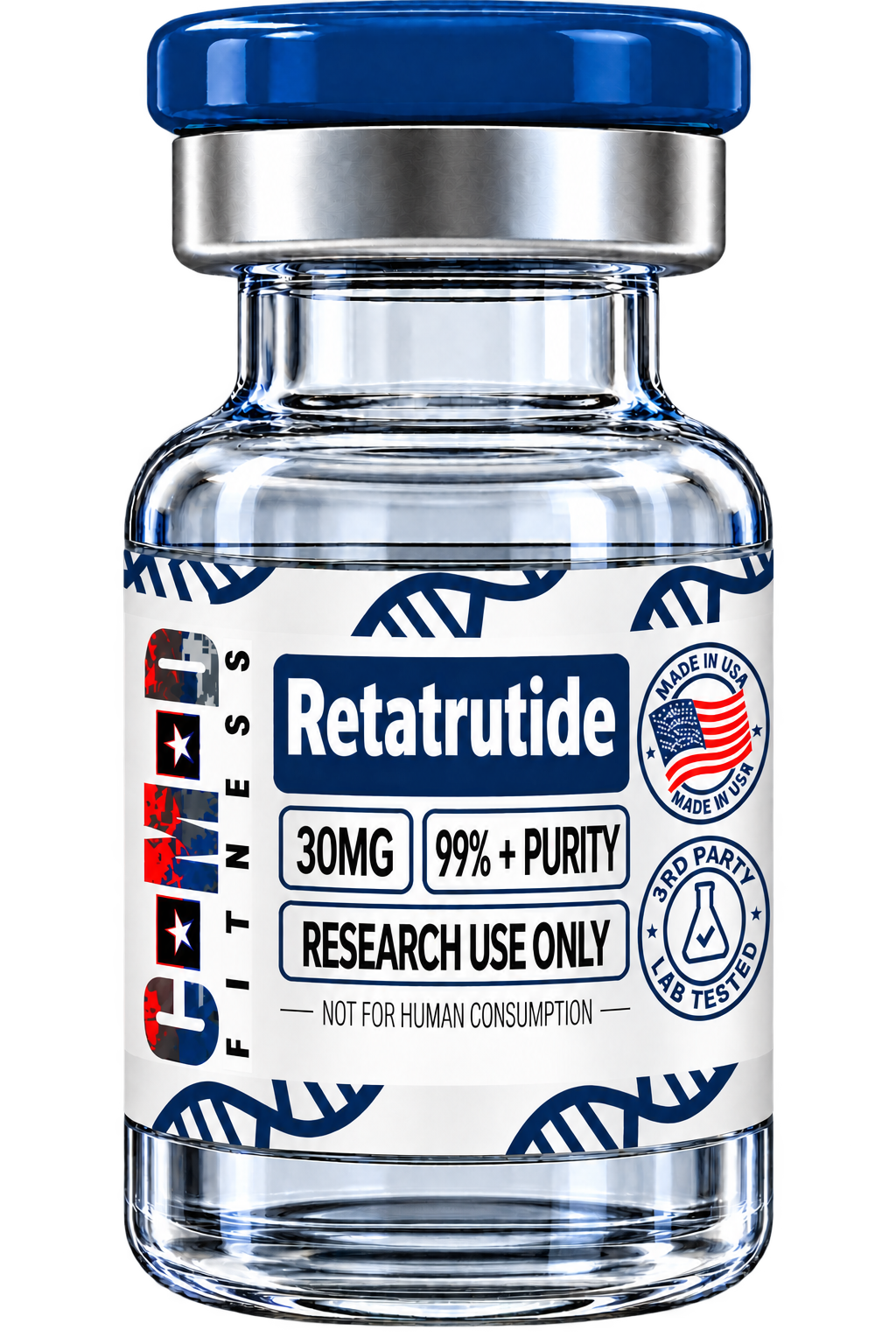

For research use only. Not for human consumption.
Retatrutide is an investigational triple-agonist peptide that simultaneously targets GLP‑1, GIP, and glucagon receptors to promote weight loss, improved insulin sensitivity, and enhanced metabolic regulation in research and clinical studies.
Price:
$150.00 – $400.00Price range: $150.00 through $400.00
Select Quantity:
Retatrutide is a synthetic peptide designed as a triple-agonist, simultaneously activating three key hormone receptors: GLP‑1 (glucagon-like peptide-1), GIP (glucose-dependent insulinotropic polypeptide), and the glucagon receptor (GCGR). This multi-receptor approach allows Retatrutide to combine appetite suppression, improved insulin sensitivity, and increased energy expenditure, producing significant body weight reduction and metabolic improvements in preclinical and clinical research.
Unlike single or dual incretin therapies, Retatrutide’s triple-agonist design targets multiple metabolic pathways for a synergistic effect on obesity, type 2 diabetes, and cardiometabolic health. It is delivered via subcutaneous injection and is currently investigational, being evaluated in Phase III clinical trials.
Type: Synthetic triple-agonist peptide
Receptors Targeted: GLP‑1R, GIPR, and GCGR
Mechanism of Action: Appetite suppression, enhanced insulin response, increased energy expenditure
Delivery: Once-weekly subcutaneous injection
Research Use: Preclinical and clinical studies in obesity, metabolic disorders, and type 2 diabetes
Retatrutide is a next-generation multi-receptor peptide that leverages GLP‑1, GIP, and glucagon signaling to produce weight loss and metabolic benefits. Its synergistic triple-agonist mechanism distinguishes it from older incretin-based therapies and makes it a focus of research into advanced obesity and metabolic treatments.
Type: Synthetic peptide
Amino Acid Length: Modified sequence derived from GLP‑1, GIP, and glucagon analogs
Molecular Weight: Approximately ~5000–6000 Da (varies slightly by formulation and modifications)
Structure: Linear peptide with chemical modifications to enhance stability, receptor specificity, and half-life
Receptor Targets: GLP‑1R, GIPR, and GCGR
Multi-Receptor Activation: Engages three hormone receptors simultaneously for synergistic metabolic effects
Appetite Regulation: Activates GLP‑1 and GIP pathways in the CNS and pancreas to reduce food intake
Energy Metabolism: Stimulates GCGR-mediated energy expenditure and fat oxidation
Insulin and Glucose Control: Enhances insulin secretion and glucose homeostasis through incretin pathways
Stability: Chemically modified to resist enzymatic degradation and prolong in vivo activity
Weight Management: Reduces body weight via appetite suppression and increased energy expenditure
Glycemic Control: Improves fasting glucose, insulin sensitivity, and HbA1c levels
Metabolic Health: Potentially improves lipid metabolism, cardiovascular markers, and overall metabolic profile
Water-Soluble: Suitable for in vitro and preclinical research
Modified Linear Peptide: Includes amino acid substitutions and chemical modifications for enhanced receptor affinity and pharmacokinetics
Half-Life: Optimized for once-weekly dosing in clinical trials
Retatrutide is a synthetic, multi-receptor peptide with biochemical properties tailored for simultaneous GLP‑1, GIP, and glucagon receptor activation. Its water solubility, chemical modifications, receptor specificity, and enzymatic stability make it ideal for research on obesity, metabolic disorders, and type 2 diabetes.
Investigating mechanisms of appetite suppression and satiety via GLP‑1 and GIP pathways
Studying energy expenditure and fat oxidation mediated by glucagon receptor activation
Researching synergistic effects of triple-agonist peptides on body weight reduction
Evaluating potential therapeutic strategies for severe obesity
Examining insulin secretion, glucose homeostasis, and HbA1c improvement
Researching effects on insulin sensitivity and pancreatic beta-cell function
Studying incretin-based mechanisms in type 2 diabetes models
Investigating lipid metabolism and cardiovascular markers
Researching the impact of triple-receptor activation on overall metabolic profile
Studying mechanisms underlying metabolic syndrome and related disorders
Exploring multi-receptor agonist peptide design and structure-activity relationships
Studying pharmacokinetics, receptor specificity, and chemical modifications to improve half-life and stability
Evaluating preclinical safety, efficacy, and translational potential
Retatrutide is used in research for obesity, metabolic disorders, type 2 diabetes, and cardiometabolic health, leveraging its triple-receptor mechanism (GLP‑1, GIP, glucagon) to study weight loss, glucose regulation, and metabolic improvements. Its stability, receptor specificity, and pharmacological profile make it a valuable tool in preclinical and clinical translational studies.
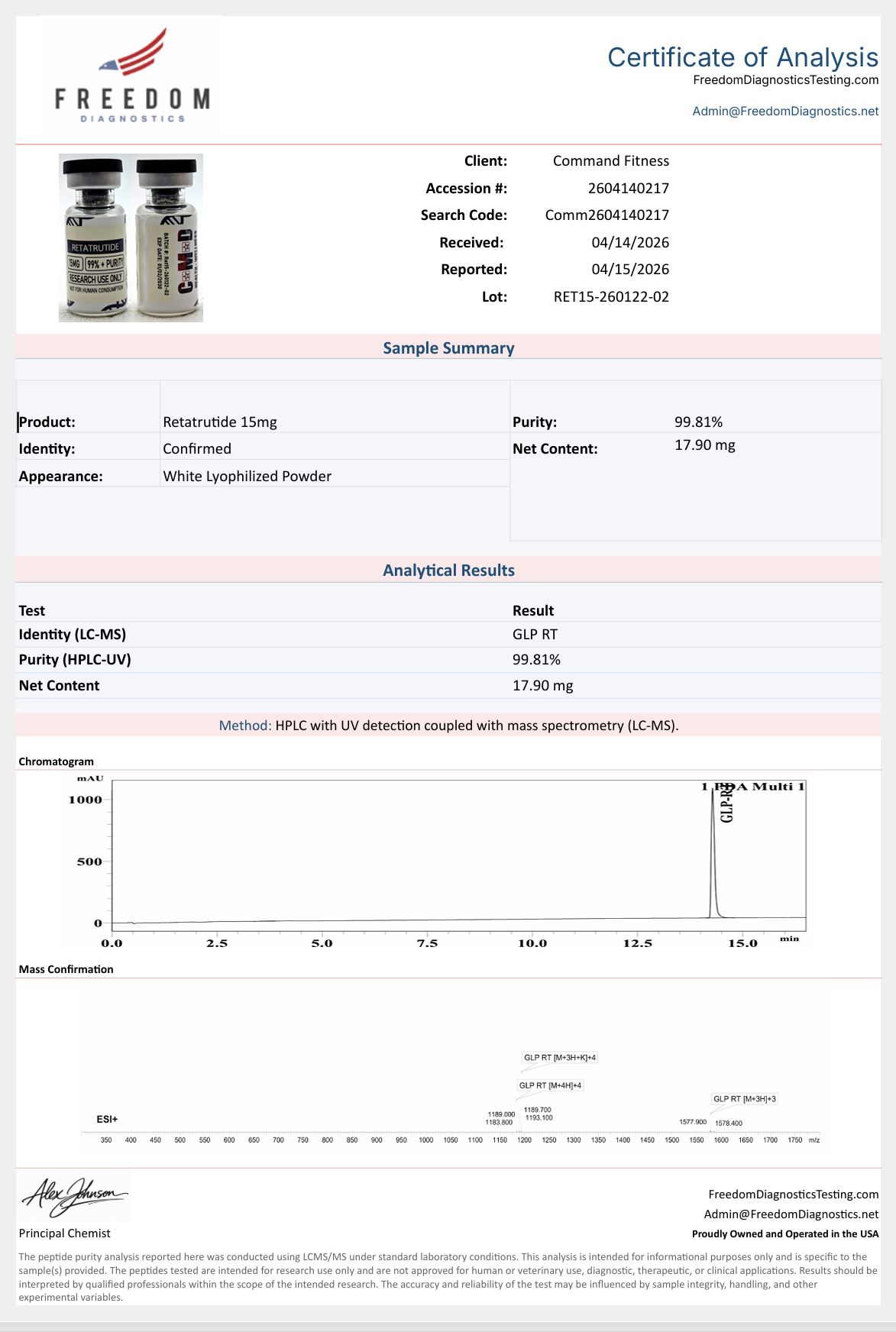
Tested by Freedom Diagnostics Testing @ Freedom Diagnostics Testing – Reliable. Accountable. Accessible.
Temperature: Store refrigerated at 2–8 °C (36–46 °F) for short-term use
Long-Term Storage: Freeze at −20 °C or lower for extended stability
Light Protection: Keep protected from direct light
Moisture Protection: Store in tightly sealed, dry vials
Shelf Life: Typically 12–24 months under proper storage conditions
Diluent: Sterile water or appropriate buffer
Temperature: Store refrigerated at 2–8 °C
Use Period: Recommended within 7–14 days after reconstitution
Handling: Gently swirl to dissolve; avoid vigorous shaking
Do NOT freeze after reconstitution
Inspect solution before use: should be clear, colorless, and free of particulates
Discard if cloudy, discolored, or precipitated
Use sterile techniques during reconstitution and experimental handling
Protect from heat, light, and mechanical agitation to preserve peptide integrity
Retatrutide is most stable as a lyophilized powder stored refrigerated or frozen. Once reconstituted, it should be kept cold, protected from light, and used promptly to maintain biological activity for research in obesity, metabolic disorders, and type 2 diabetes.
Command Center is a leading provider of USA manufactured, research peptides.
Copyright 2026 © Command Center All Rights Reserved