

Veteran-owned business
Product Usage: This PRODUCT IS INTENDED AS A RESEARCH CHEMICAL ONLY. This designation allows the use of research chemicals strictly for in vitro testing and laboratory experimentation only. All product information available on this website is for educational purposes only. Bodily introduction of any kind into humans or animals is strictly forbidden by law. This product should only be handled by licensed, qualified professionals. This product is not a drug, food, or cosmetic and may not be misbranded, misused or mislabeled as a drug, food or cosmetic.

For research use only. Not for human consumption.

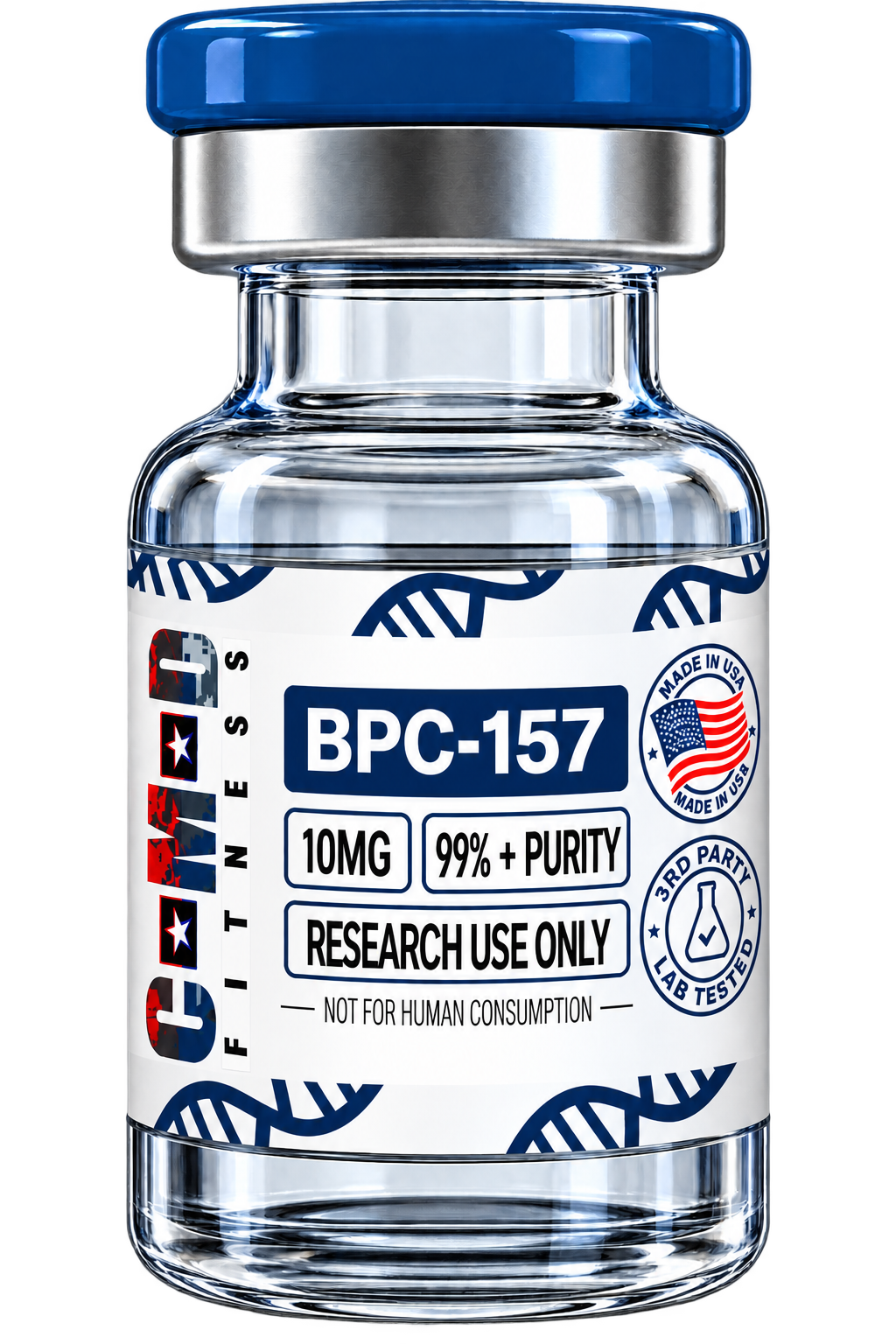
BPC-157

BPC-157 (Body Protection Compound-157) is a synthetic pentadecapeptide derived from a protective sequence found in human gastric proteins. It has been extensively studied in preclinical research models for its potential role in tissue repair pathways, angiogenesis, cellular protection, and modulation of inflammatory processes.

Price:

$50.00

Select Quantity:

45 in stock

Overview

PC-157 is a 15-amino-acid peptide sequence investigated for its biological activity related to healing and regeneration mechanisms. Research has explored its interaction with multiple molecular pathways involved in tissue recovery, including growth factor signaling, blood vessel formation, and cellular communication.

BPC-157 has gained interest in sports science, regenerative biology, and cellular repair research due to studies examining its effects on connective tissue, gastrointestinal systems, nervous system pathways, and musculoskeletal recovery models.

Biochemical
Characteristics

  • Peptide Name: Body Protection Compound-157 (BPC-157)
  • Classification: Synthetic pentadecapeptide
  • Amino Acid Sequence: Gly-Glu-Pro-Pro-Pro-Gly-Lys-Pro-Ala-Asp-Asp-Ala-Gly-Leu-Val
  • Length: 15 amino acids
  • Molecular Formula: C₆₂H₉₈N₁₆O₂₂
  • Molecular Weight: Approximately 1,419.5 g/mol
  • Solubility: Water soluble
  • Appearance: White to off-white lyophilized powder (typical research presentation)

Research Applications

Tissue Repair & Regeneration Pathways

BPC-157 has been studied for its potential influence on:

  • Fibroblast activity
  • Collagen production pathways
  • Connective tissue remodeling
  • Cellular migration and repair signaling

Angiogenesis & Blood Vessel Formation

Research models have investigated BPC-157’s relationship with:

  • Vascular endothelial growth factor (VEGF) signaling
  • Formation of new microvascular networks
  • Improved local blood flow mechanisms

Inflammation Modulation

Preclinical studies have explored possible effects involving:

  • Inflammatory signaling pathways
  • Cytokine regulation
  • Oxidative stress responses

Gastrointestinal Research

BPC-157 was originally investigated due to its association with gastric protective properties and has been studied in models involving:

  • Intestinal barrier integrity
  • Mucosal protection
  • Digestive system repair pathways

Research Applications

BPC-157 is commonly researched in areas including:

  • Musculoskeletal recovery studies
    • Tendon and ligament research
    • Muscle injury models
    • Connective tissue biology
  • Gastrointestinal research
    • Gut barrier function
    • Mucosal repair mechanisms
  • Inflammation research
    • Cellular inflammatory responses
    • Recovery signaling pathways
  • Neurological research
    • Nerve injury models
    • Neuroprotective signaling investigations
  • Regenerative medicine research
    • Tissue remodeling
    • Cellular repair pathways

Potential Areas of Scientific Investigation

Research interest has focused on:

✓ Tendon and ligament repair mechanisms
✓ Muscle recovery pathways
✓ Cellular protection
✓ Angiogenesis signaling
✓ Inflammatory response modulation
✓ Gastrointestinal tissue protection
✓ Growth factor interactions
Chemical Properties
  • Peptide Type: Synthetic peptide fragment
  • Stability: Sensitive to environmental factors including heat, moisture, and repeated temperature fluctuations
  • Storage Form: Typically supplied as a lyophilized powder
  • Handling: Requires controlled storage conditions to preserve peptide integrity
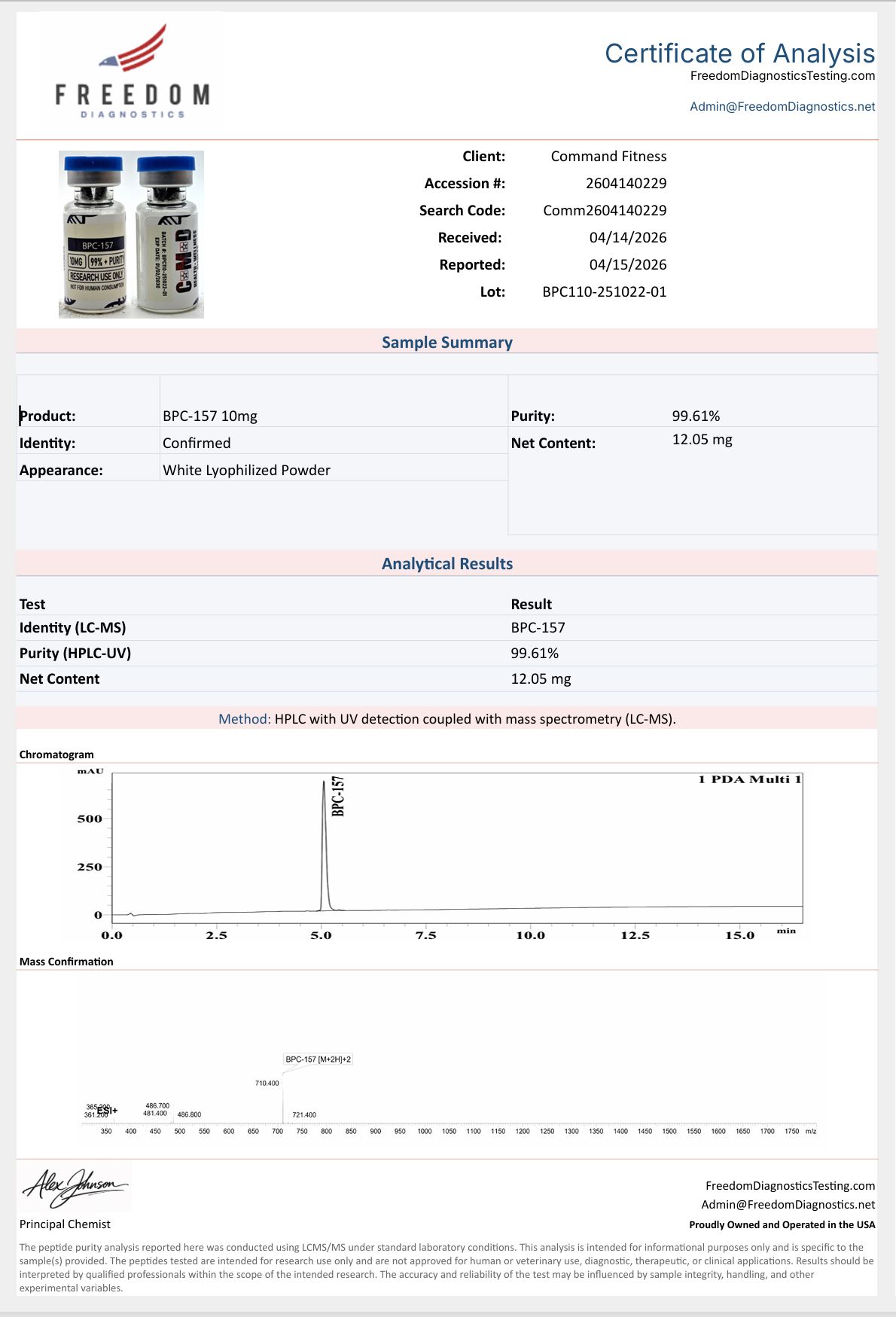
COA /HPLC / MS

3rd Party Testing

3rd Party Tested by Freedom Diagnostics Testing @ Freedom Diagnostics Testing – Reliable. Accountable. Accessible.

Storage
  • Store lyophilized peptide in a cool, dry environment.
  • Protect from direct light exposure.
  • Avoid excessive heat and moisture.
  • Maintain proper storage conditions according to manufacturer specifications.
  • Once reconstituted, follow appropriate peptide handling and storage protocols.
Your cart is currently empty.

Return to shop

0